A sample text widget
Etiam pulvinar consectetur dolor sed malesuada. Ut convallis
euismod dolor nec pretium. Nunc ut tristique massa.
Nam sodales mi vitae dolor ullamcorper et vulputate enim accumsan.
Morbi orci magna, tincidunt vitae molestie nec, molestie at mi. Nulla nulla lorem,
suscipit in posuere in, interdum non magna.
|
It’s racing time again. I’m off to South Africa with my mate Liehann to ride the Freedom Challenge – something entierly different for me. I’ve been actually training a bit for cycling, just to ensure I won’t blow up in the first 50k! Which isn’t to say that won’t happen. Assuming all my gear gets to South Africa in the first place!
For good follow-along fun, some links:
Official freedom challenge tracking link – note as the FC uses cellular trackers, and there’s not reception everywhere, this may be working intermittently. Last year it was terrible but this seems to be a new site. This is a full screen tracking link for the same system.
Beat’s personal tracking page and Liehann’s personal tracking page are based on my own tracker. We’re using sat trackers so hopefully those will work most of the time (unless we forget to turn them on).
Jill is embarking on another go of the Tour Divide. You should be able to track her at Tour Divide Trackleaders .
Cheers! Beat
Looking at my blog I realized I basically haven’t written a race report since 2012! Even Steve is blogging more often than I am. Partially this is because Jill is doing a better job than me anyways. Another reason is that my remaining reports are gargantuan (I’ve tried to start the ITI Nome report(s) a few times but didn’t make a real dent) and the backlog is long.
Generally my time is spent:
– Racing
– Designing and developing gear and software for the Iditarod, PTL/TDG, Freedom Challenge (for Jill) and various other events.
– Working at my dayjob
– Attempting to start a race report on the two Nome races
Right now, I’m about to take off to Europe for another PTL/TDG duo (PTL has mad stats this year with 183 miles and 87000ft of ascent! No idea if I can do this!). Then ITI preparations will be in full swing again, and soon after, I will dip my toes into endurance biking with the Freedom Challenge. Dip my toes, followed by a slip and full-body splash that is. I’m quite excited to try out something new, and the FC community and race seems fascinating and awesome.
I hope I can at least occasionally throw in some reports on stuff I’m working on. I’ve got a good sewing machine, a small CNC mill, 3d printer and a SMD rework station at my disposal … these days all necessary tools in a DIY diddlers quiver.
Happy trails!
So what have I been up to in 2013? Not much, as it turns out. I’ve run fewer races than in past years, but they were all very satisfying. All in all, it’s been a great year for me – great personal life, great work success, great adventure fun. The year had it’s share of sad news as well though: my stepdad passed away from cancer. He was an inspirational man, in many ways embodied more of what ultra endurance sports is to me than most elithe runners ever will.
1. Iditarod Trail Invitational (~1000m)
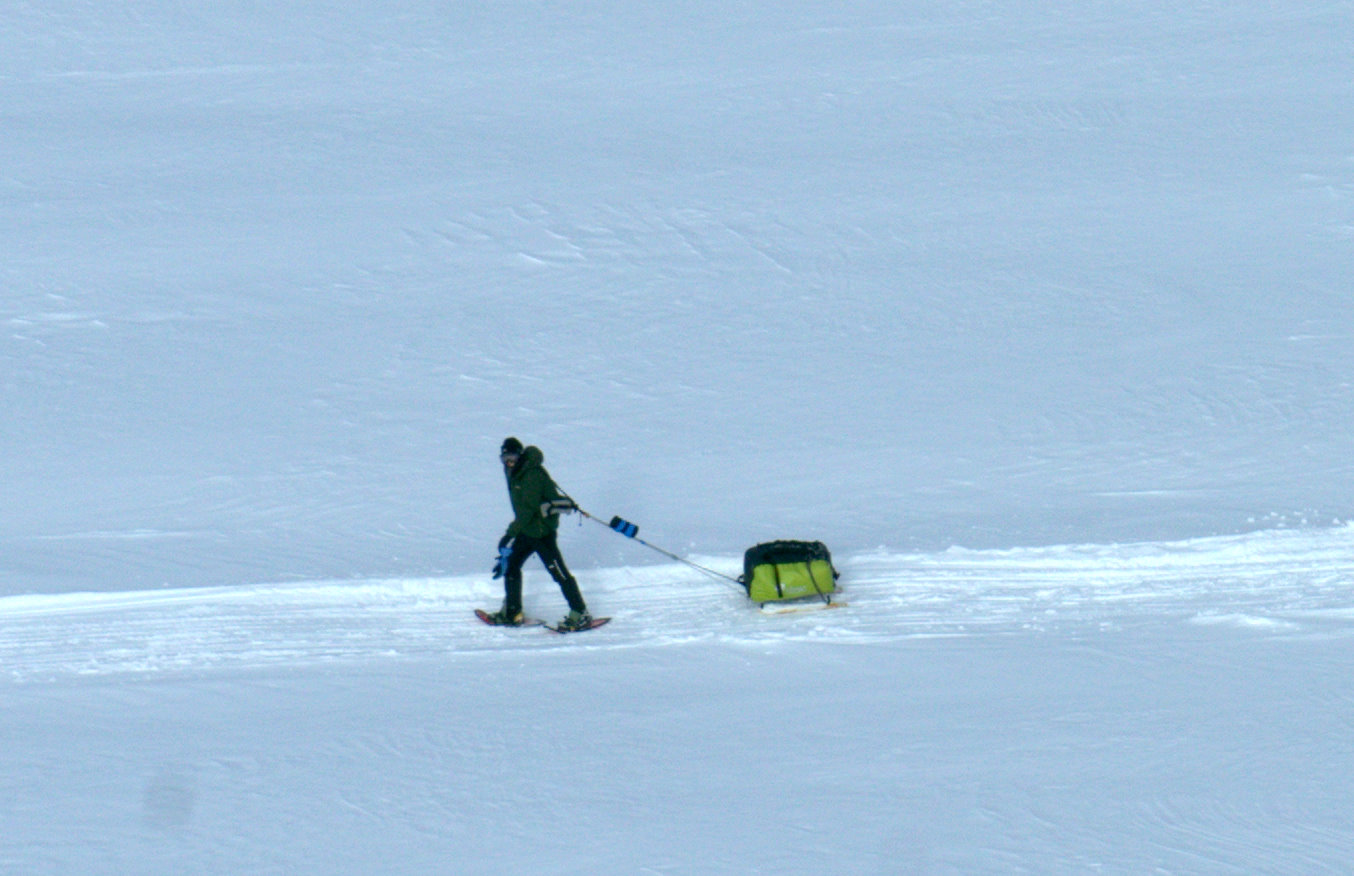
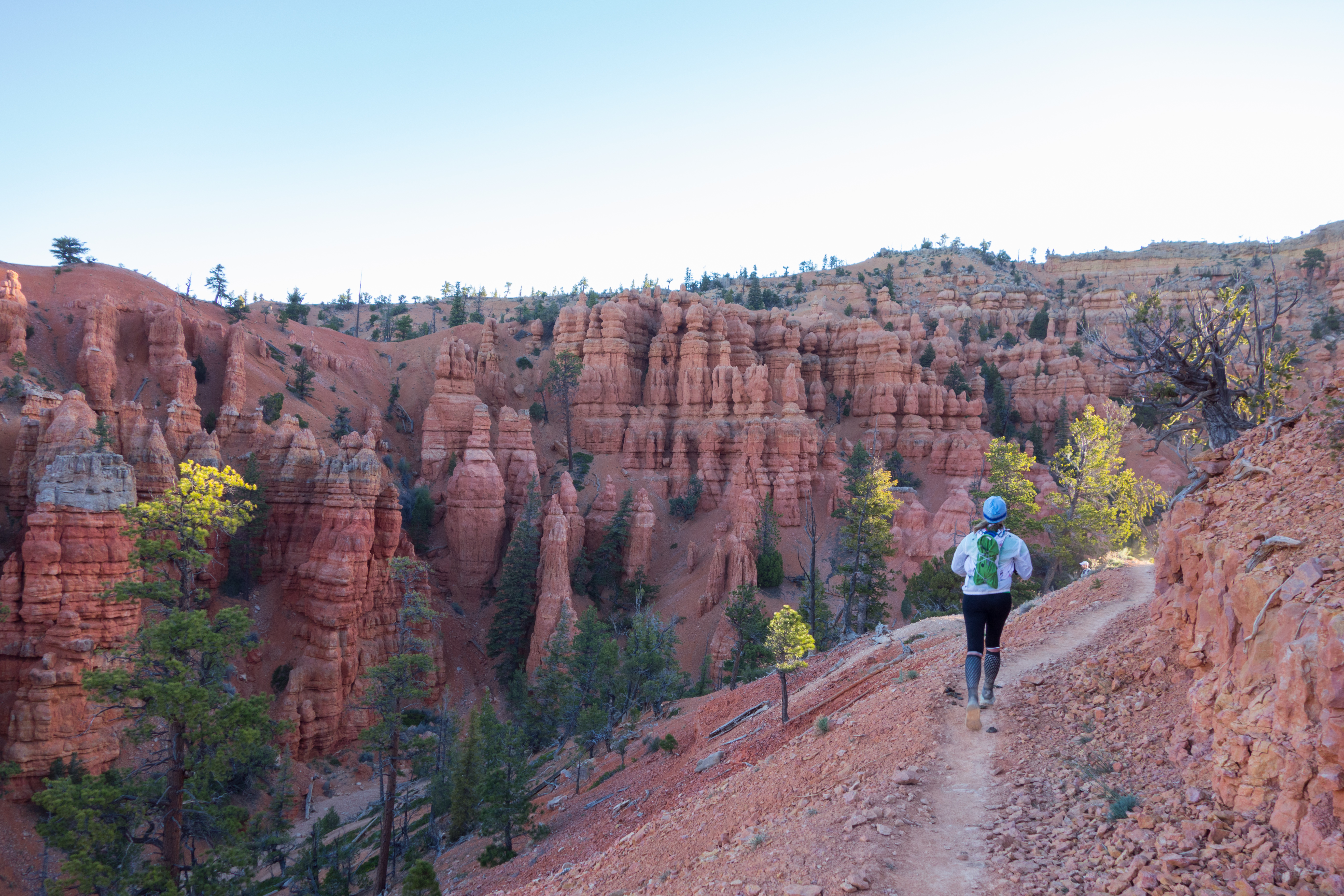
If I could only do one race for the rest of my life, it would be this. Not because it’s the “hardest” (seriously what’s the stupid obsession with that these days?) but because it enriched my life in many different ways, from meeting the most friendly and selflessly helpful people in the villages along the way all the way to at times being reduced to true survival mode (in the actual sense of the word – you might not survive).
2. Quicksilver 50m
It took me a while to bounce back from the ITI, longer than normal for sure. Most of all, I lost my will to push myself – it’s not so much that I felt physically exhausted, it was much more mental. The quicksilver was my litmus test to see if I would ever be able to race again. It turned out pretty well, all things considered, and I was happy. Lots of friends all around really made this one stand out.
3. Bryce 100m
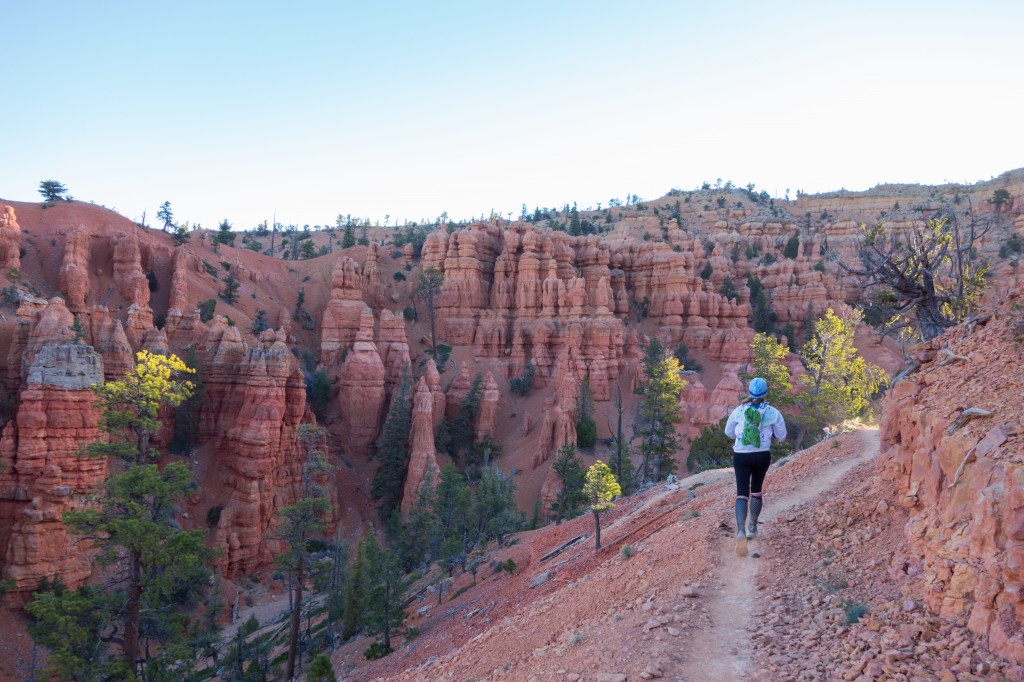
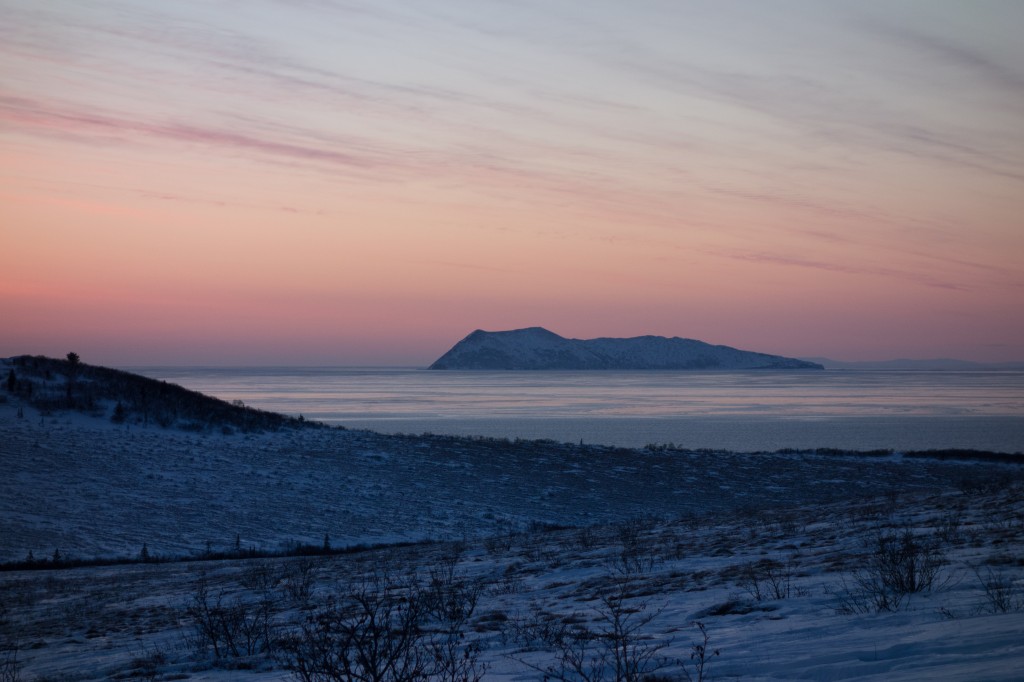
The Bryce looked like too good of a race to pass up, and sure it was. Kudos to the RD for bringing out a fresh small event in an unbelievably spectacular setting. I ran it with two of my best friends and Jill – it was really good fun.
4. Laurel Highlands 70m
I couldn’t pass up a personal invite from the RD for this, even though it was just a week after Bryce. It went well for me, and great times were had enjoying the hospitality of my personal hero and ITI legend Tim Hewitt.
5. RTP Iceland (250km, stage)
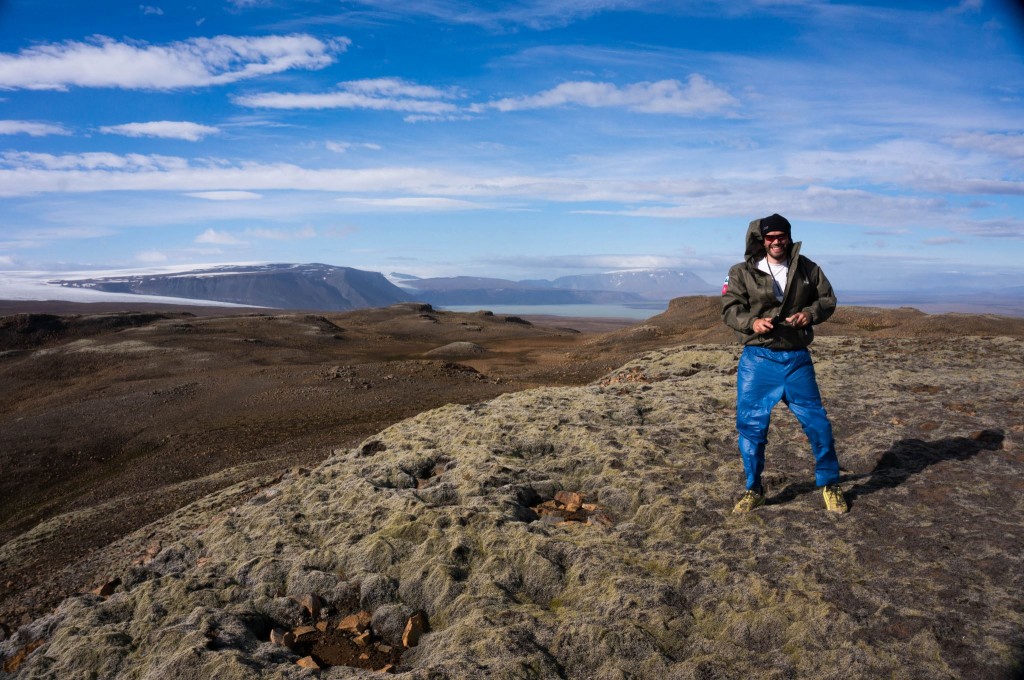
Ah the pleasures of a stage race in a very windy, wet and cold place. Iceland was fun, the landscapes stark, striking and impressive. Met a new best mate: Dan Plane, who I expect I will do some adventures with, though sadly he’s on the other side of the world.
6. PTL (300km, ~80000ft ascent)
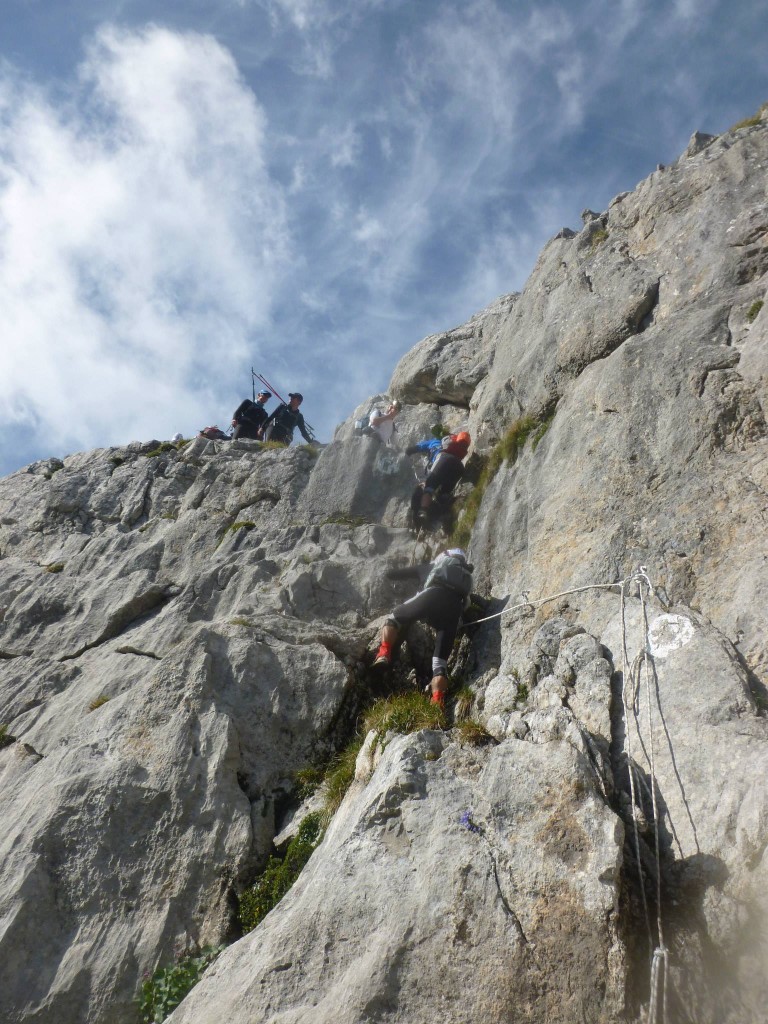
This year’s PTL was longer, steeper, more exposed and technical than the last one. Very unfortunately my good friend Daniel could not join me last minute due to an urgent family issue, but Dima provided good company and a competent running mate for this race. It was epic as always, more miserable than ever, and I got to know a host of cool people from Denmark and Sweden.
7. TDG (330km, ~80000ft ascent)
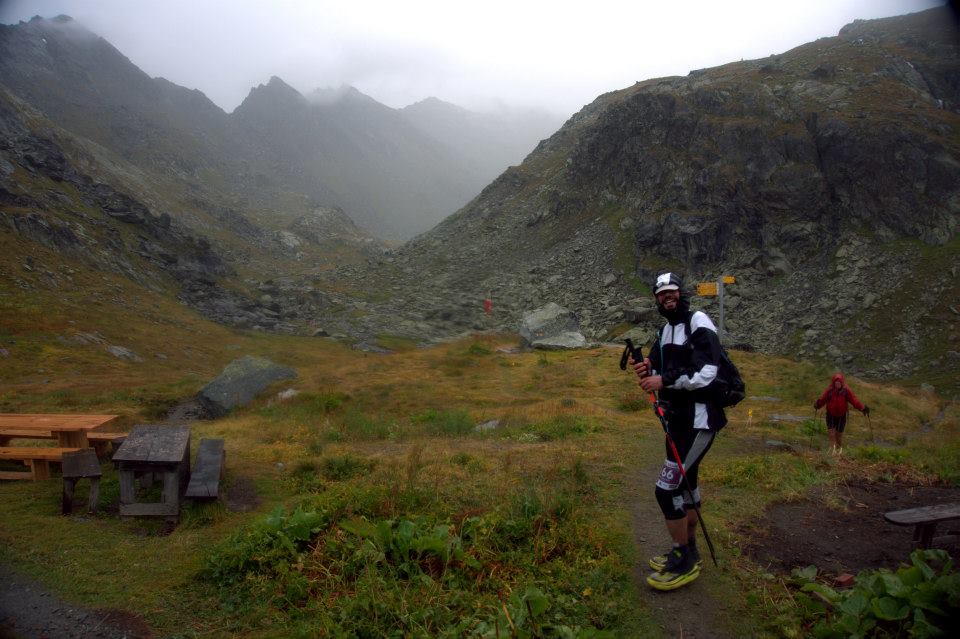
I started the TDG with some doubts in my mind. The miles went by very slowly at first, and it took me longer than the previous year to hit my stride. But once that happened … it went really well. A personal best so far, one week after the PTL. I love that race, still, even though there’s now no beer at smaller aid stations. One notable sad event is that a chinese runner died due to a head injury sustained during a fall early on in the race.
And well … that’s it! I did six more 50km races during the year to keep the legs moving, but I generally approach them as training runs, and my will to go fast in those has all but disappeared. All in all this adds up to 1953 miles of racing. This may sound much, but I assure you my training mileage is dwarfed by what you are likely doing!
For 2014, I hope I will see the arch in Nome again (though that’s never certain), and PTL and TDG and Bryce are on the program as well, and maybe another 100. Jill has a huge bike year planned, which will be exciting to follow.
P.S. On a side note, people keep asking me how I can manage to do this much traveling and racing. The answer is a mix of luck, hard work, and life choices. For one, no kids – this isn’t a choice I made to be able to do this sort of thing, that would be silly, but that unrelated choice nevertheless allows me a lot more personal freedom. I’m also lucky that I’m good at my job because I like very much what I’m doing, work in a field that’s currently well compensated, and work for one of the best companies to work for in the world (particularly when you’re a software engineer). I perform well, and as a result I get some freedom to take unpaid time off as well as vacations when they suit my race schedule. I also made sure I stick with a great manager who lets me do this. Taking this much time off is not without compromise though, even at a good place – it certainly slows career growth. To me, that’s more than worth what I’m getting. Lastly, we pretty much only spend money on gear and travel. Otherwise (apart from a Whole Foods habit) we live relatively cheaply compared to my colleagues, and we rent a place, keeping ourselves flexible. The biggest enabler though is Jill – we’re very much alike in our goals and it’s been exceedingly easy to create a cool life together – things just “fit”.
So ultimately there’s no “trick” to this. But I do know many many people who find their own ways to live really fulfilled lives – but of course sometimes ones circumstances simply don’t allow this (and no, runner Facebook preachers: you really can’t do “anything” and you can’t always succeed if you just try hard enough … otherwise I’d have cured cancer and crated world peace a while back, let’s set the priorities here …). That’s one reason I live this maybe excessive seeming life – I take it while I can, because I know nothing lasts forever.
Ok I realize this blog seems abandoned by now, but I’m still working on things. The Iditarod Nome race report has turned out to be as gargantuan a project as the race itself. Also race season has been busy with Iceland, PTL and TDG, so there wasn’t too much time, particularly given work has been – and still is – very intensely busy. Oh, and now I have to already start preparing for next year’s Iditarod.
Still I hope to post some stuff at some point.
Cheers, Beat
After Jill posted her 2012 year end summary I feel compelled to make my own. So here we go!
1. Iditarod 350
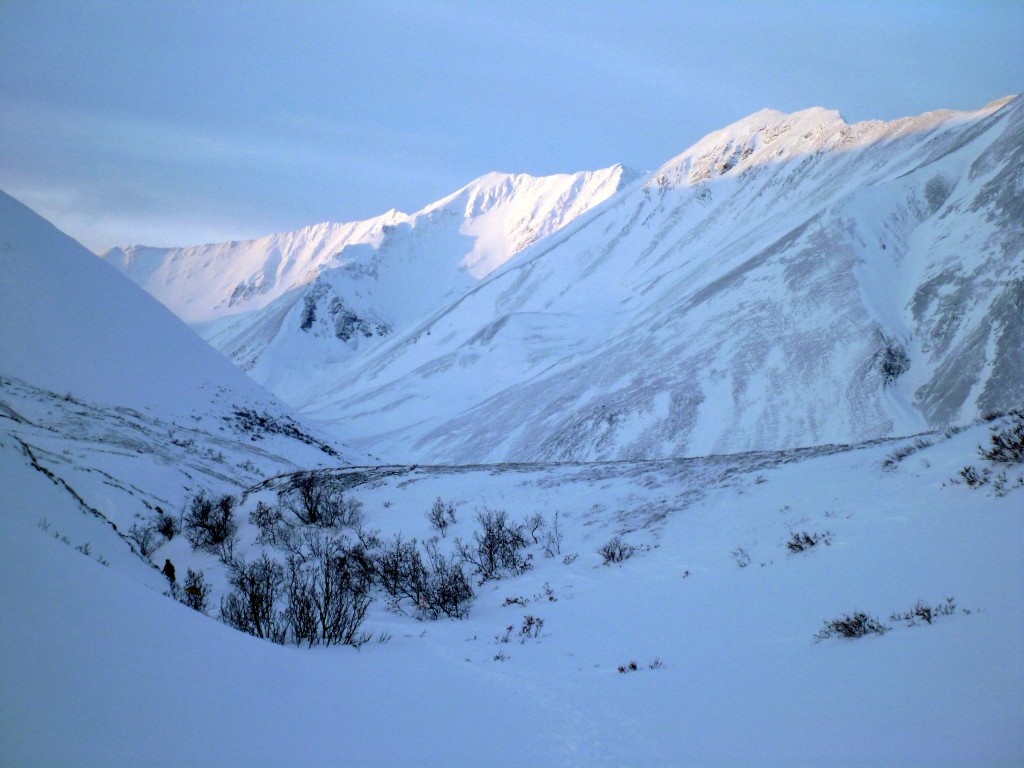 Rainy Pass Let’s start the year off easy … right? Nah. The ITI is a real adventure, dangerous, remote and with more character than Anthony Hopkins on a good day. This year it was a particular beast with trail conditions that pushed me quickly past disbelief and despair right to giggling laughter. Reports are here, here and here.
2. White Mountains 100
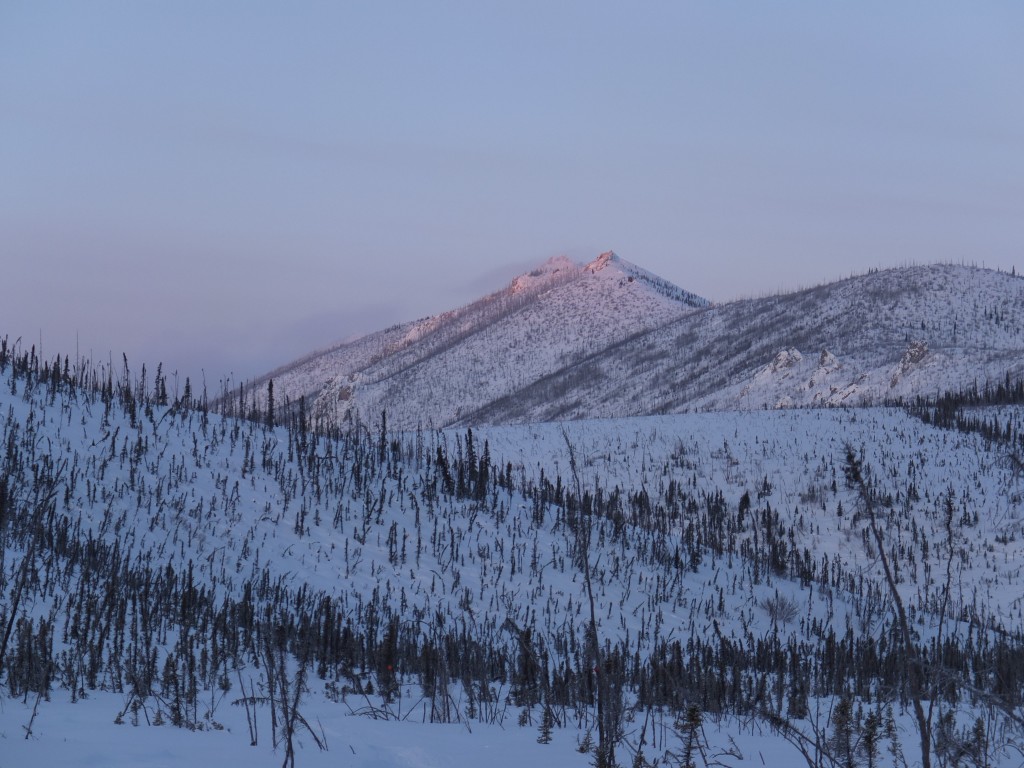 Almost like the ITI Jill characterized the White Mountains as all the fun of the ITI without the drama, compressed into one day (on a bike at least). Only way to find out is to do both in the same year, just 3 weeks apart. And with a small snowstorm, the cool Cache Mountain divide, lots of overflow, sun, mild temperatures and soft and good trails and northern lights it pretty much is indeed as Jill said. Though the ITI drama is fun in its own way.
3. SBER 100 30
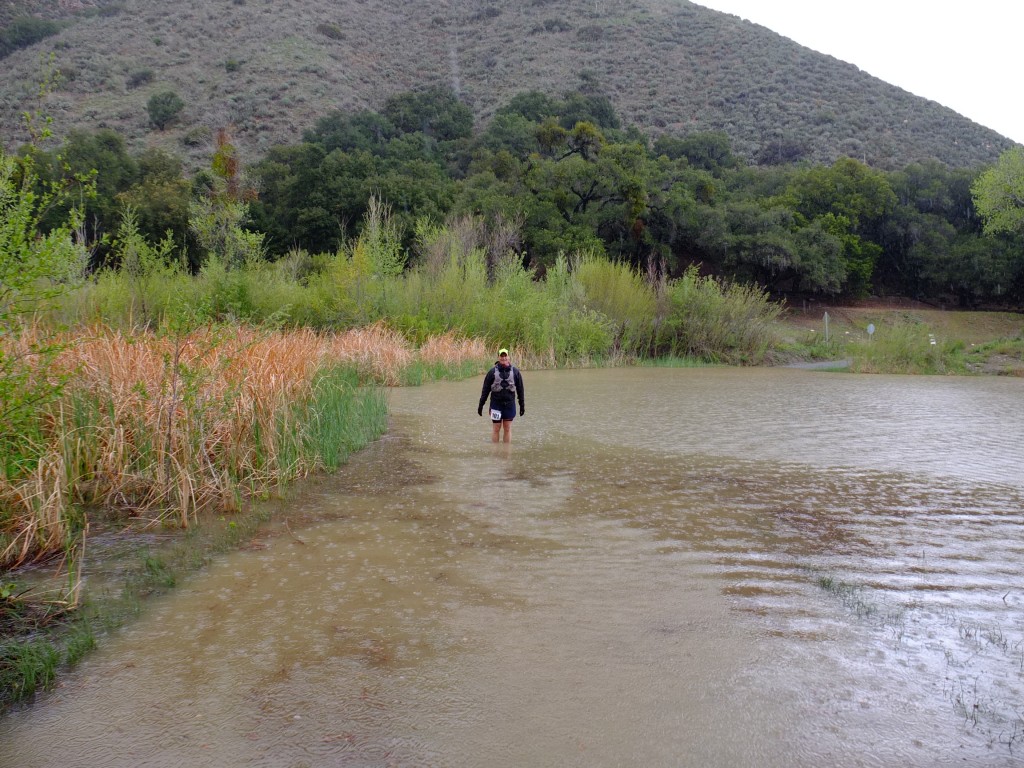 You sure this is the road? The Santa Barbara Endurance Race happened to happen just during a nasty nasty storm … which turned trails into mudslides and flooded roads which led to the cancellation of the race. My friend Steve and I semi-purposely got lost early on with a few more runners and put in more distance than most. Just as well.
4. Highlands Ultra 70
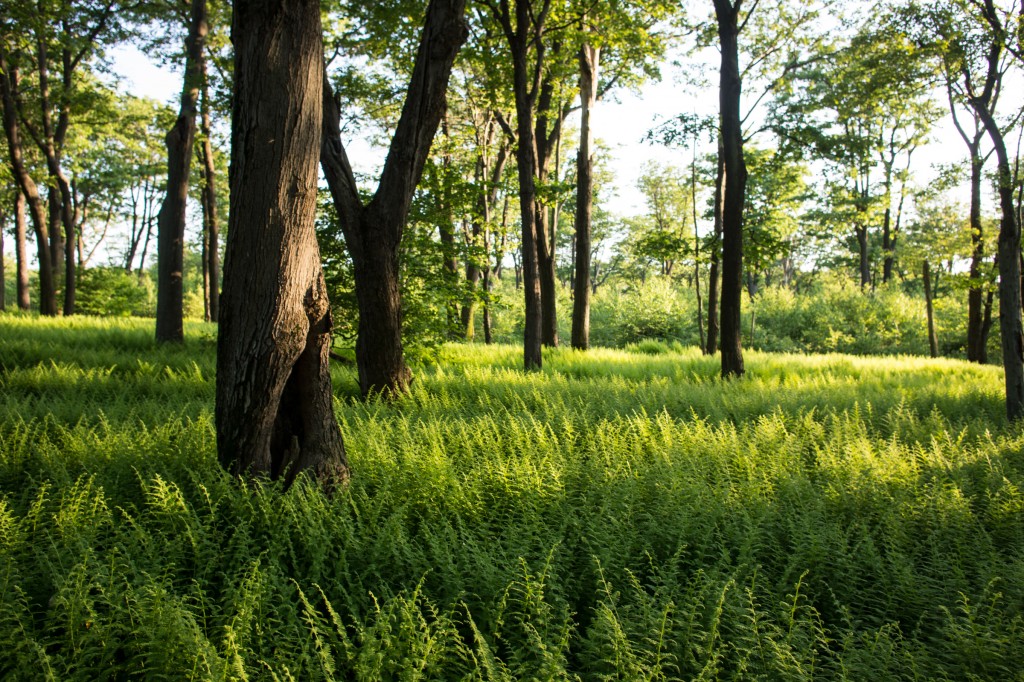 Trail running heaven. The main reason for me to run this race was to visit Tim Hewitt and Rick Freeman, the RDs and friends I made in the ITI. As it turns out, the race is held on a solid stretch of almost exclusive singletrack with nary a house to be seen – both surprising and exciting. The trails aren’t as bad as Massanuttens, but still technical. In an earlier ultra I had pulled a muscle in my butt which caused me some debilitating hip pain, so this race ended up to be a 60 mile limp with some of the most excrutiating pain I’ve experienced. However, I couldn’t let Tim down, unwise as it might have been … and pushed to the end. Ouch!
5. Hardrock 100
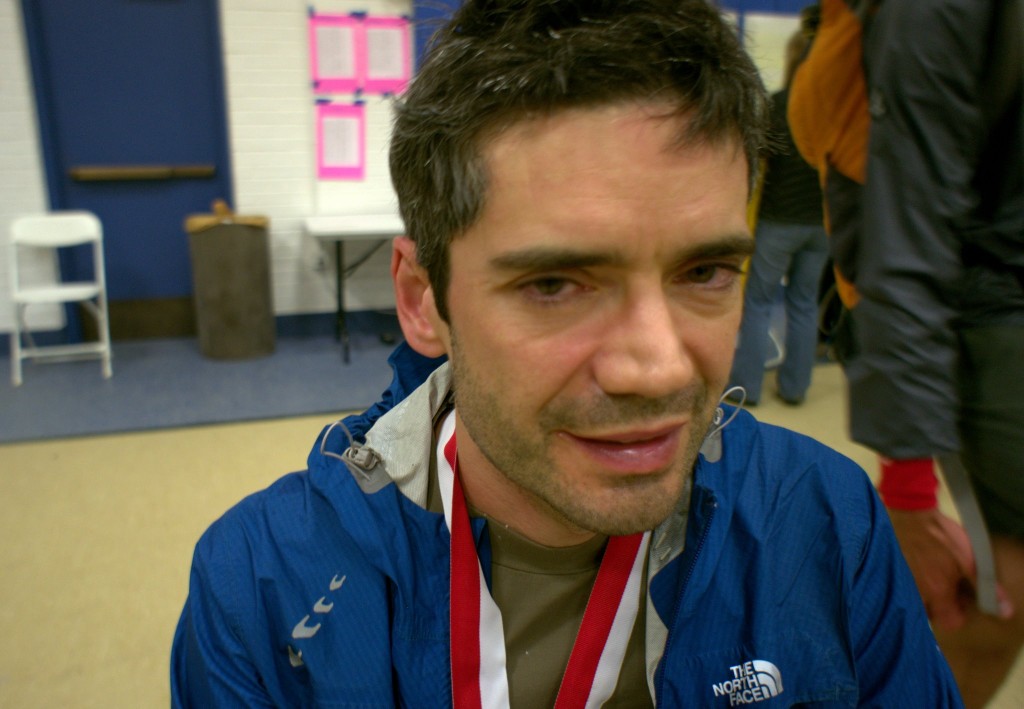 T’was a hard one. Photo by Jill Homer Yay! The second time in 7 entries I had gotten into Hardrock, which was meant to be a good training run for the big adventures to come. We stayed with my friend Daniel who also paced me. After 30 miles, my stomach turned and it wouldn’t come back til the finish. I rarely ever throw up unless I have some acute food poisoning or such, but here I did throw up – quite a bit, and then some even when the stomach was empty. It was a slog of slogs, the last pass feeling almost impossible. But Daniel provided good support and honed his patience, and it was a great race anyways.
6. PTL
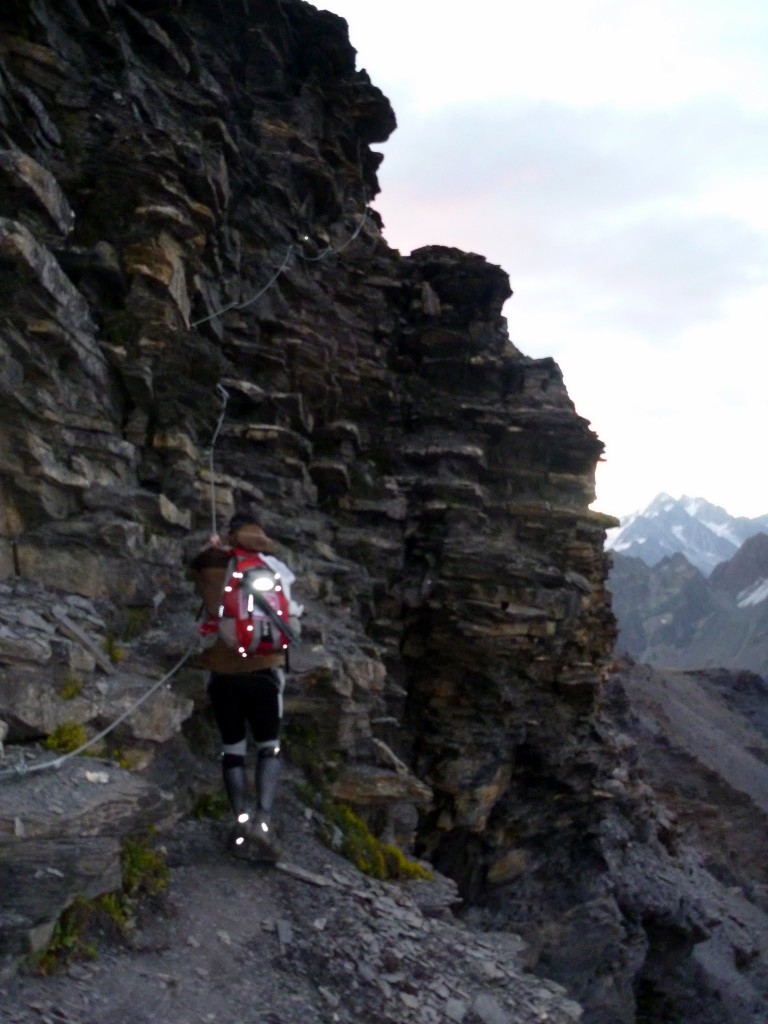 An easy section … they had a cable there. Photo by Daniel Benhammou. The Petit Trot A Leon. Sounds cute, no? Let me just say so much: don’t trust the French. Seriously. This race had it all: rarely-used hard to find trails, exposure, days of rain, mud, sub-freezing temperatures, and a snow storm to boot. We (one races in teams of 2 or 3 persons for safety reasons) got re-routed just to find ourselves postholing cross-country over a pass. It was awesome. Little support, the course (190 miles and ~74000ft of climbing) and the adverse conditions made this one of the most formidable adventures I’ve had yet. Never mind I made a few stupid mistakes early on and lost the skin under both heels, which added some unexpected challenges to an already tough course.
7. TDG
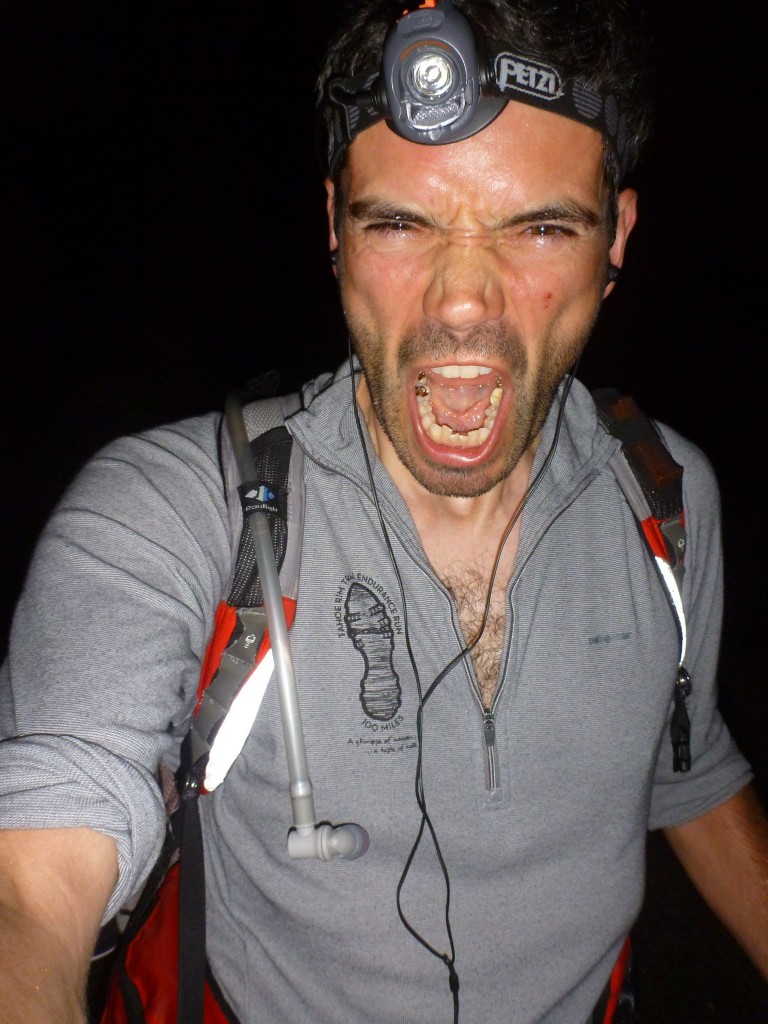 White Limo on high volume = ass-kick-energy! My third running of the TDG started just a week after the PTL finished. Just enough time for my heels to develop a thin layer of new skin. Starting took some great ignorance of the fact that my feet were not up to the task … surprisingly the first challenge turned out to be fatigue (and probably dehydration from a very hot day), and on the third pass (out of 24 …) I had cramps like never before, almost unable to descend. After that passed, my feet predictably started to issue the most elaborate pain messages to my brain. By km 100 I was ready to call it quits, miserable and beaten. Things took an unexpected turn right before the longest downhill in the race, a measly 8000ft in one go, when I put on some Foo Fighters and cranked up the angriest song I could find in my collection, “White Limo”. Miraculously I turned from crawling to flying and had a strong race after that, moving up over 100 places. My feet still hurt like hell, of course, but my spirits were lifted. The weather turned to some very very cold temps (15F or so) and ultimately the last 30k of the race were cancelled due to an iced up pass. While it’s one of the most scenic sections, it’s not a very hard one despite a last high pass, and I know I could have done this as well. We were still considered finishers, and all but very few runners were in the same boat.
8. Frog Hollow 25h
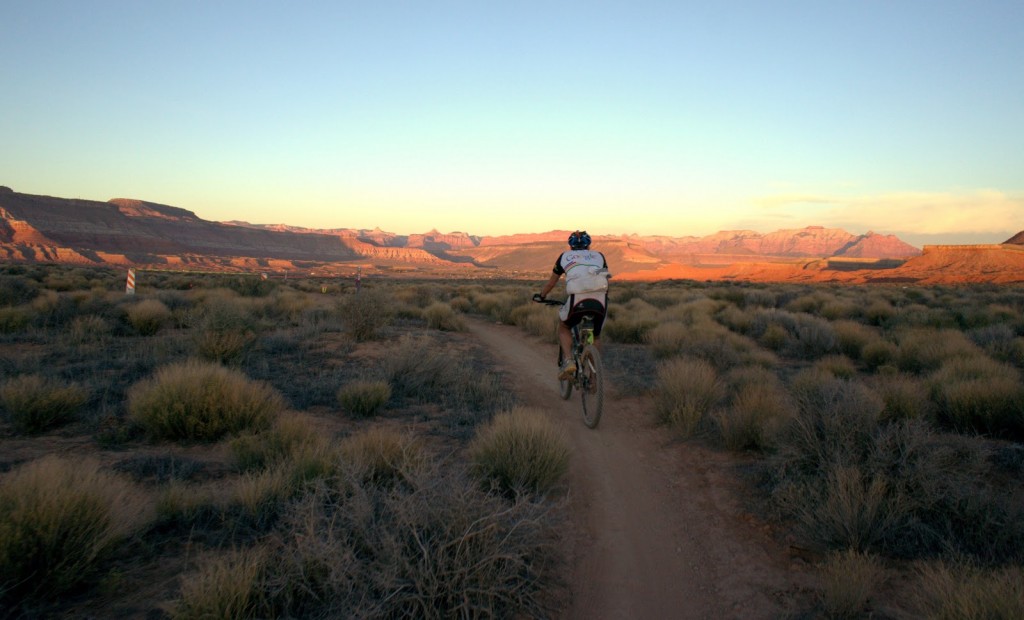 Riding into the sunset … To prove to Jill I’m not just a one-trick pony I signed up again for the Frog Hollow, this time solo. Our friend Liehann was also there, and good times were had. Jill thought it’d be neat if I rode single speed which I promptly took as an excuse to build a full suspension single speed niner (the discerning older gentleman’s single speed). Of course two weeks before the race I managed to break a rib in a near-comical slow-motion uphill crash not being able to release from Liehann’s ill-maintained pedals (yes it was, indeed, Liehann’s fault!). But miraculously the rib fused up the night before the race – maybe my unwashed sleeping bag has some strange healing powers. I didn’t push it all too hard and took a looong nap but still managed 10 laps, which was my goal. I later kicked myself because with some solid effort I could have moved up maybe 2 spots onto the podium, though who knows. Guess I’ll have to find out next year!
9. The rest
I love running 50ks because it’s good fun to hang out with friends and interesting folks and I’m too lazy to train for long distances on my own!
– Crystal Springs
– Brooks Falls
– Steep Ravine
– Cinderella
– Ohlone
– Diablo 60k
– Steep Ravine (again!)
– Crystal Springs (again!)
– Berkley Trail Adventure
– Horseshoe Lake
– Mt Tam
– Coyote Ridge
– Woodside Ramble
The Bay Area does have its perks … and I only ran a fraction of the races here …
All in all about 1440 miles on foot. I think I can say now with some authority that racing a lot does NOT make you any faster. But all in all it’s been a fantastic year!
Just a quick status post. The PTL (Petit trot a Leon) was done last Sunday with ~180m length and ~72000ft of ascent, it was great fun, great effort, awesome company, lots of sketchy trails (orders of magnitude more and longer than for example Hardrock, or TDG), snow storms and a gigantic blister which removed most of my right heel skin. A real mountain adventure, in many ways the antithesis of UTMB this year. Noone knew (some italians thought we were doing the TDG) and we met very few people on the trails, as the field spread out rather quickly.
The TDG start is a mere 36 hours away, 7 days and a few hours after we finished PTL, and I just stopped limping. I’ve been moisturizing the feet like there’s no tomorrow with three kinds of cream, and healing is going along very well … but I have serious doubts this will be enough for another 210 miles of punishing trails. Ah well, I’ll give it my best, but do not be alarmed if I drop – possibly after 20 miles! The new skin will be prone to cracks (especially where it interfaces with the thicker old skin), ripping and more blisters … I might give it my best tape job, then hope for the best. Oh, I also have a slight cold. Either way it should be another few fun days in the alps!
Some PTL Pictures here, bit out of order, I borrowed some of Daniel’s pictures.
Race updates may be posted here.
Off to the dumbest thing I came up with yet …
Into the wild
 Dusk along the Kuskoquim river I called Jill on my way out (fortunately it was an easy trail since I wasn’t looking where I was going … tsk tsk) and beamed about how awesomely beautiful the area was and told her my bivy plans. Soon I was back on the Kuskoquim river going over more ice and some questionable terrain. After a mile or so of this the trail veered off to parallel the river for a while, then further down turn towards the farewell burn. In my mind, this part would be flat, eerie and possibly cold. I had totally forgotten about the ice falls and the general course notes I had read of the section. Initially the trail looked like it could be right in the neighborhood park in Anchorage, going straight and nicely packed through a spruce forest, but soon turned out to be very surprisingly rolling with very short but very steep climbs thrown in. Everytime I thought I got to the end of it, there was another, steeper, climb that made me curse and exclaim “those crazy dogsledders! What are they thinking?”. My sled was like a lead anchor behind me and occasionally I felt I could barely make it up there, and more concerningly I got quite hot and started to sweat a bit, which is absolutely not what I had planned for going into the frigid night. I kept my temperature in check with lots of venting, but still felt a bit wet … or was it just the biting cold? It was hard to tell the difference. My speed was significantly lower than I hoped for despite halfways good course conditions. Bare ground at times and lots of small moguls which are formed by tussocks made even flat sections a lot slower and more tedious than I expected. How long would that last? The forest was now partially burnt down and the whole section became a lot more desolate and apocalyptic looking, especially at dusk. Soon enough I arrived at the frozen waterfall – really more of an ice slope, at an easy angle but basically glare ice, which means without traction there’s a lot of tears and cursing. I was surprised since I’d totally forgotten about it and didn’t expect it this soon. I planned to simply put on my snowshoes and wander right up the thing, but I noticed I was standing in about an inch deep sloppy overflow which gave me pause – for one I wasn’t watching where I was going, and I wondered if there was a possibility to punch through. Since there was some open water, I put on my waders and the snowshoes and went up the fall. It was now dark and it was a pretty eerie, somewhat scary and cool experience to go up this strange structure. I wondered how the dog sleds go up here and thought again of Jill hauling her bike up this thing. I also noticed that snowshoes have limited traction on super cold slick ice, and I had to forcefully jam them into the ice to gain enough traction to not tumble and slide down the whole thing. Around Egypt Mountain I started to look for a bivy spot, quite a bit before my original plan, but I had made much slower progress than anticipated. I passed Frank and Rick and kept rejecting spots until I found a nice flat snowy area … until I tried to make a little trench and I realized it was a slab of solid ice.
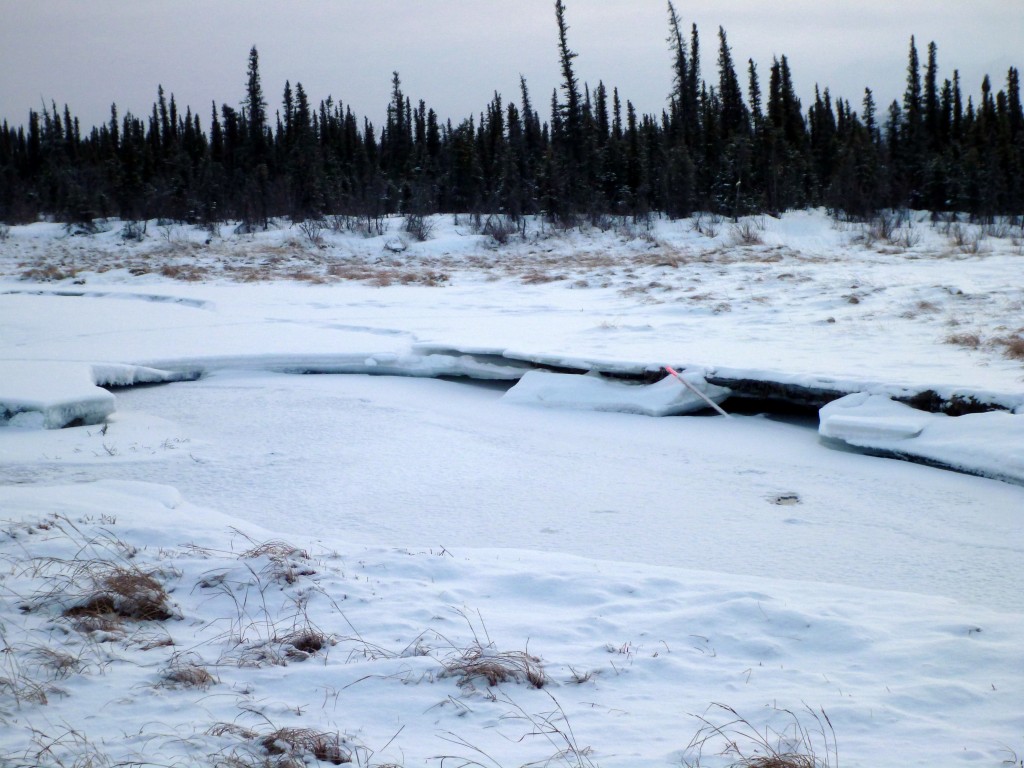 Maybe don't go where the lath is ... Bivying on ice is both cold and of uncertain stability, so I kept going until I simple went into some trees, having gone just past Egypt Mountain. I made a little trench, unrolled my bivy bundle (one of the few things that worked as well as I hoped – I just had to undo a few buckes and the bivy, pad and sleeping bag unrolled into a ready to use bivy setup …), flipped my sled for additional wind cover and crawled into my bivy. However, that was really the only thing that went well … bivying is a rather cramped affair, and additionally I needed to put my shoes, water and all my clothing into the sleeping bag which didn’t really add comfort. I put my shoes under my legs to lift them a little, something that makes sense for a runner but alas – not when it’s -40F. Generally you don’t want to do anything to reduce circulation in your extremities, and of course that’s just what I did … I felt warm but mighty uncomfortable in my cocoon and kept hyperventilating with the feeling of not getting enough air. Once I found an acceptable opening of my bivy zipper I calmed down … and had to pee. Trying to unzip the bivy zippers one got stuck (note to self: don’t use superlight gear when your life depends on it … unless you know it really works) but fortunately it was a double zip … After THAT I finally calmed down enough to fall asleep for a little while … When I woke up at maybe 6 panic struck me – my toes were really cold, and the toenail of my right big toe felt sort of numb and icy cold. I had a big blister underneath the toenail from snowshoeing and I wondered if that liquid actually might have frozen – it sure felt like it. I wiggled my toes like a madman and finally came to the conclusion everything was still working. The rest of my body was toasty warm … which isn’t a nice thing if you know you have to get up into the icy cold. I dozed a little longer, reluctant to get out because it seemed really cold outside … but finally got up. I was disconcertingly disorganized though my gigantic down jacket prevented any major panic attacks – that thing is seriously warm! Sadly I had to eventually take it off and put my shell jacket on … I felt ok for quite a while, it was cold but I was moving ok, passing the farewell lakes (which wouldn’t have made for an inviting bivy spot either). It turned out to be a very clear and beautiful sunny day, and I walked reasonably contently (despite my back again bothering me) along the trail that went through swamps and sparse spruce woods, every now and then catching a glimpse of the Alaska range behind me. The bareish tussocky trail gave way to a more reasonable snow level.
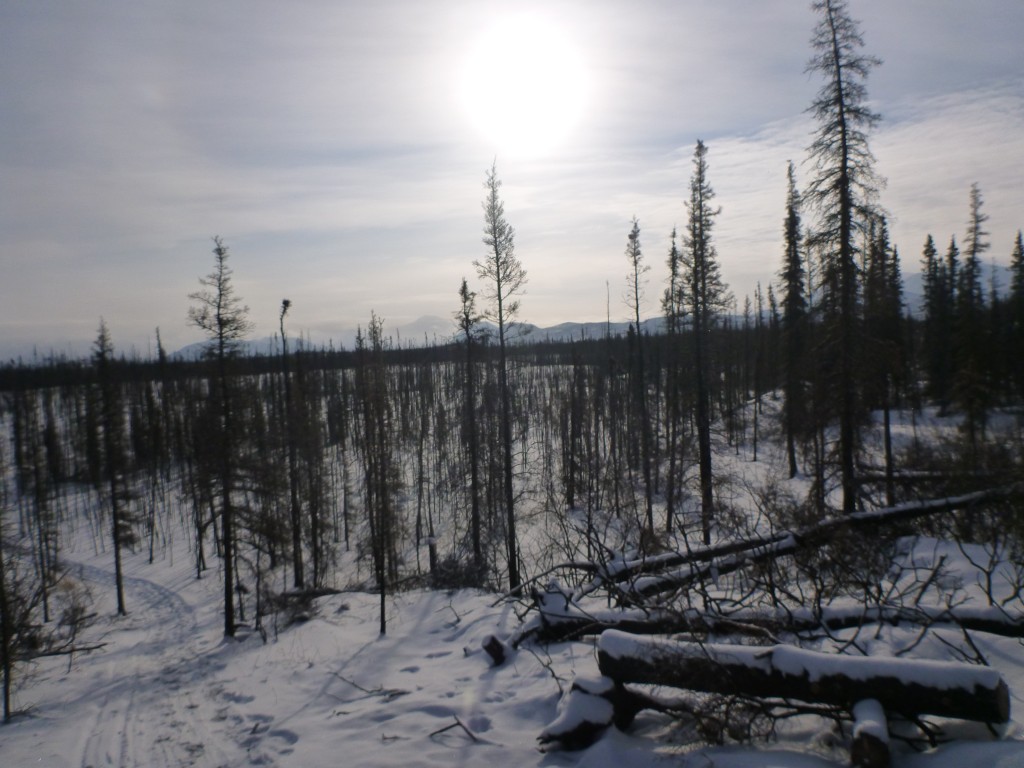 Pretty day in the burn The terrain still was rolling, often crossing creeks and swamps which means you drop steeply on one side, flatten out for a dozen or so yards and then climb up a bit again – not much, but just enough you wouldn’t think it was easy. I decided it was a good time to call Jill and she told me about what was to come. Shortly after that, I decided it would be a good idea to take a picture of the Alaska range behind me … to find I had lost my camera!
 Got my camera back!!! I sort of panicked and unpacked my sled about two times to no avail. I left my sled and ran back on the trail for probably half a mile or maybe even a mile – but nope. I felt strangely strong and free without the anchor, and at the same time very naked. And surprised that, indeed, I could still run! Back at the sled I was overcome with sadness about not being able to share my adventure with Jill and called her, distraught. Resigned in my fate I carried on, when a group of snowmachiners – the only people I had seen all day so far – pulled up. The first guy asked me “Did you lose a camera?” – “Indeed I did” – “We found it about 7 miles back” and he gave it back to me! I thanked him profusely – what were the chances! There’s nothing like that to re-energize you, and I motored on, much happier.
Finally, after what seemed endless climbing into little creeks and over small ridges and hills I got to Bison Camp. Although it was supposed to be broken down, there were some people resupplying the camp there (presumably exactly the ones who gave me back my camera), which made the trail seem almost populated. Soon after I dropped down into the flat part of the burn, the trail cutting a straight line for many miles, as far as the eye could see. After not long, looking either forward or back the trail looked exactly the same – just an endless cut through the young trees. The combination of the straight manicured looking trail, perfect clear sky weather, trail markers and ribbons and a lot of young spruce trees gave me the eerie feeling of being just outside a big city, as if I was on an Anchorage ski trail or so. I expected to see a large group of people to come by anytime, but after the encounter with the snowmachiners I would not see anyone but racers for the rest of the trail to Nikolai. That unexpected loneliness and the menacing dead burnt old trees and bushes between the young spruce gave the burn a surreal but almost menacing feel – something seemed to be wrong. More than once I was reminded of The Shining and I half expected Jack Nicholson to jump out with an axe from behind one of the trees. However, I also was getting worn out and tired, my back pain had come back again to drive me insane and the target cabin just did not want to get closer. My energy seeped away hour by hour and by the time I was really getting tired I could see on the GPS it was about 6-7 more miles. Normally this would be reason to rejoice, but here, with these conditions, it meant 2-3 hours of slogging, all the while still having almost 100 miles left. The combination of difficult movement, very slow speeds in the face of those gigantic distances made the ITI mentally the most challenging race I had encountered yet – the mere thought of the next checkpoint, even the next intermediate goal, was demoralizing and attacked the very core of my ultra strategy, to break things down into achievable goals. In addition, I had no music with me and I started to get mentally too tired to even let my mind wander – something that, in the face of endless slogging, usually works, I distract myself by thinking about random things – but this had ceased to work. All my mind would do is think about the heavy sled, the drag, the mile I was on and why the distance to the cabin on my gps only moved by 0.1 miles since I checked it the last time. I was even too exhausted to throw a good temper tantrum.
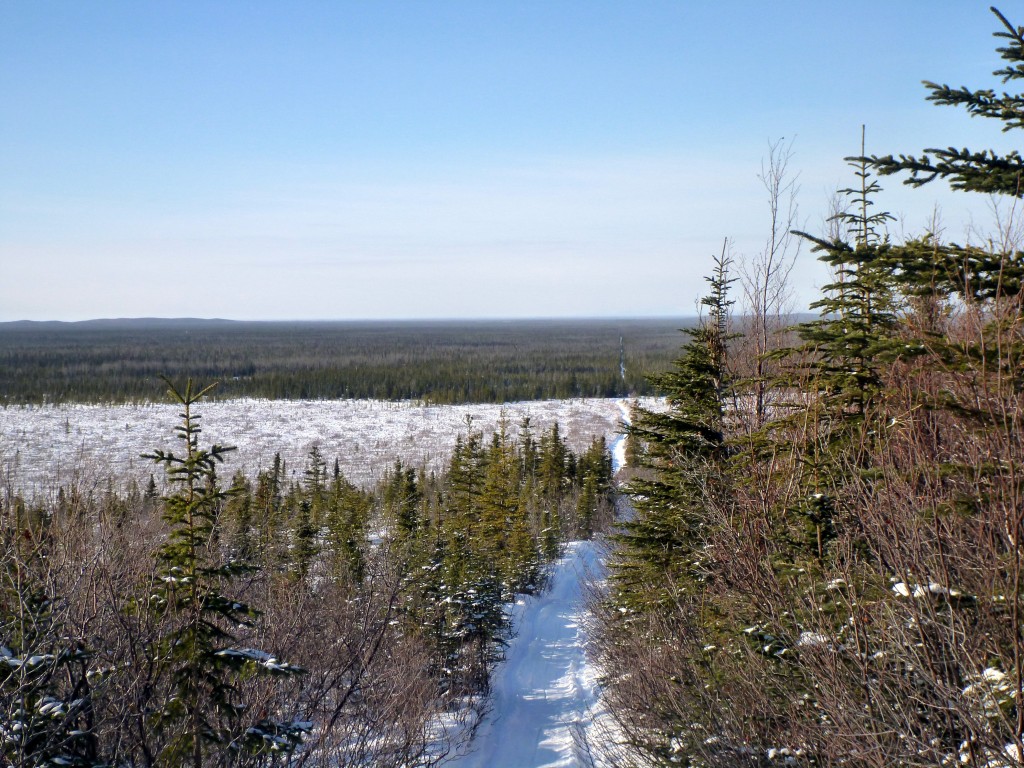 That's ... long. Finally I got to the cut-off to the shelter on the trail. I had previously toyed with the thought of bivying or going on to avoid the 1 mile detour (the closest place dry enough for the shelter to survive the summer) but it was very cold and I was desperate for some rest. The trail off the main trail was challenging since it had only been broken by a snowmachine a while back and a few racers, and I almost put my snowshoes on. The mile seemed to go on forever, and I even had to make a stop to rest, something very discouraging for such a short distance. Turn after turn I thought the cabin would be right there … but it wasn’t, until I finally got there. It was still light, maybe 6 or 7pm, and I planned on leaving by midnight or 1am again.
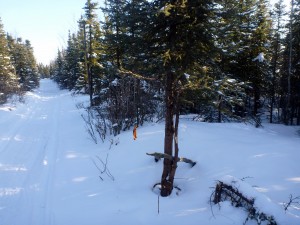 Not hungry enough for this. Rick, Frank and Anne were in the cabin, and thankfully a fire was burning in the stove and it was toasty warm inside. I hung up my stuff and looked for a place to sleep, which turned out to be under the table since all the bunks were occupied. Fortunately there was enough snow to make water as well, something that’s not a given in the burn – however I was running much lower on food than I had thought, and basically only had a small sandwich that Anne had put as a treat in my drop bag to spare for the evening. The floor wasn’t exactly comfortable and I didn’t get much rest until Anne left and I took her bunk. I woke up when Bill Merchant entered the cabin and shook each racer’s hand – I was sleepy and barely conscious and later was bummed I didn’t get to talk to him on the trail, but it was somehow fitting all the while. Other racers arrived, two Italians and Dave and Andrea. Dave was visibly shaken by how cold it was outside – his thermometer had bottomed out somewhere around -20F. It was now just after midnight and I figured I better get myself ready. I felt pretty terrible without much food left for breakfast and a headache. I remembered it had been quite a while since my last coffee and made myself three mocha mixes I still had – to boot, the were each fairly caloric and that was most of my breakfast. I melted some more snow for my bladder, though I had used very little water the day before – yet I did not feel terribly dehydrated either and my morning pee did not reveal anything alarming. Just as I had everything ready I noticed I was missing two balaclavas and hat I intended to use. Feverishly I searched the cabin multiple time and unpacked my sled completely, but nothing. Fortunately I had more gear, but it was wet – so I had to dry it. This delayed my departure until maybe 2:30am. Finally, with my second choice of headgear, somewhat unsettled but satisfied that my overpacking habit had finally paid off, I was ready to go. Dave’s thermometer was solidly frozen somewhere below -20F, and it was brisk.
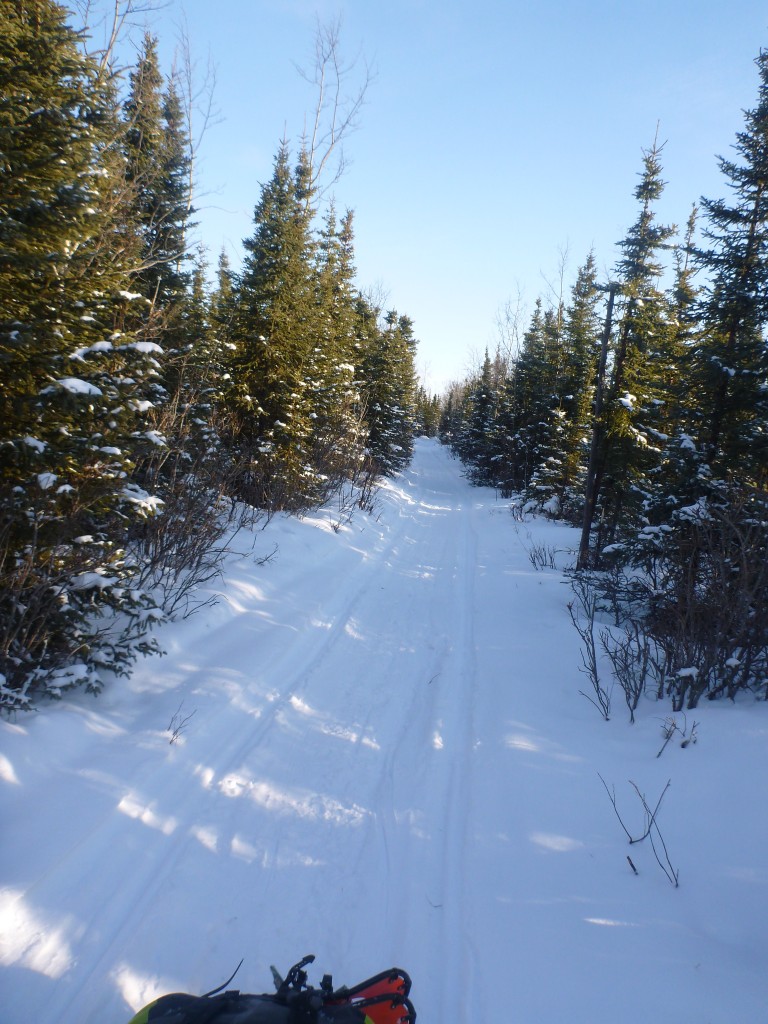 I think I saw Jack Nicholson with an axe behind one of those trees ... yikes! The difficult trail to the main trail warmed me up a bit, and soon I was cruising under a perfect starlit sky. I kept looking around for northern lights, but it was too cold to turn off my headlamp and I ended up missing those – the only night when they were visible. Soon enough I got to Sullivan Creek – the creek had a nice bridge over it, yet again making it seem like it was right in a park in the middle of a city. Right after the bridge the trail crossed a side creek again, this time with some flimsy branches over the open water. Civilization my ass! I pondered the waders but went for it – without problems, but in hindsight in those temperatures a risky undertaking. After the creek the temperatures seemed to plummet drastically – it felt like I entered a deep freezer – and that coming from -20F! I started to get chilled and my hands got cold despite wearing my trusted RBH mitten shells (though only with the light liners). Moreover there was a lot of overflow on the trail now, glare ice that made me move deliberately and slowly in many places. I decided I needed to get some handwarmers and made a stop to grab them. Rushing, I tried to unzip my duffel which had become very stiff and inflexible. Suddenly I had the zipper pull in my hand – the metal piece had broken cleanly apart. I cursed and carefully managed to open the bag with the second zipper. It occurred to me that my knife and lots of emergency equipment were inside the duffel – where it wouldn’t do me any good if I couldn’t open the bag. Now I was not only physically but mentally chilled by the realization that in these temperatures – which reportedly dropped below -40F that night – things escalate very quickly, and small mistakes could become very big ones. I put my handwarmers in and started moving again, my hands painfully cold and almost useless. Suddenly I noticed I could not feel my nose anymore. More panicked, I grabbed a turtle fur bandanna which I had in my jacket and decided to just pull it over all my headgear, including the goggles. However, that was easier said than done as the bandanna was not quite big enough, and I ended up fighting for an endless minute or two in the most bizarre and comical way, dragging the bandanna over my head, straining with myself. Finally I had the thing over my nose but of course could barely breathe, but there was nothing I could do about it. I had to just move, and I stomped in the rigid cold, worried about my chilled feet and feeling as if a cold terror was trying to grab me with thousand fingers. Suddenly it did not feel civilized at all anymore. I was scared.
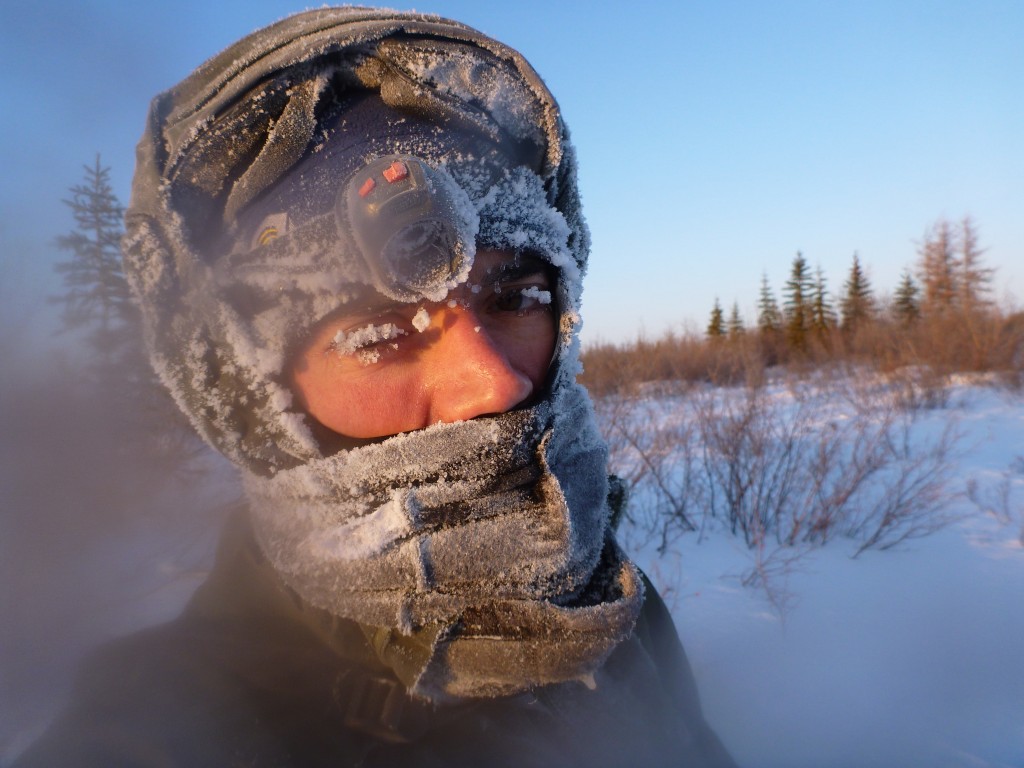 Preparing for the star wars audition. I stomed on for an hour or two, through dawn which proved to be the coldest into a beautiful day. I passed Rick and Frank – they both had bivied because they had felt sick, as it later turned out a number of racers had picked up a bug in Rohn or the Bear Creek cabin. I also started to get more confused since my GPS track I had downloaded from some Irondog site now started to diverge quite significantly from where I was going. Instead of heading towards Nikolai we seemed to continue to go towards McGrath – away from Nikolai. Fortunately I had a topo map loaded as well, and the map showed the Iditarod trail veer off towards Nikolai significantly later than the GPS track. This added probably around 10 miles to the distance, which crushed my spirits significantly. 10 miles meant 3.5 to 4 hours.
Soon Frank overtook me again and Rick caught up. We chatted a little though the trail did not allow walking side by side really, and we slowly trudged towards Salmon Camp – the dilapidated cabin where Jill had once bivied without water in the freezing cold, unable to open the door which was shut solid by a snowdrift. There was no more door, and we passed it by quickly. I knew from here it was 12 – 13 miles to Nikolai – something I could wrap my head around. The miles passed slowly and Rick stopped frequently, exhausted from being ill. I was all too willing to stop with him as I did not have enough food to really eat enough and my weird back pain was yet again driving me nuts. The sun felt great, and although it was still probably -10F, it felt like a warm summer day after the frigid night. I finally pulled away from Rick and after endless passages of swamps, rivers and lakes finally caught sight of Nikolai!
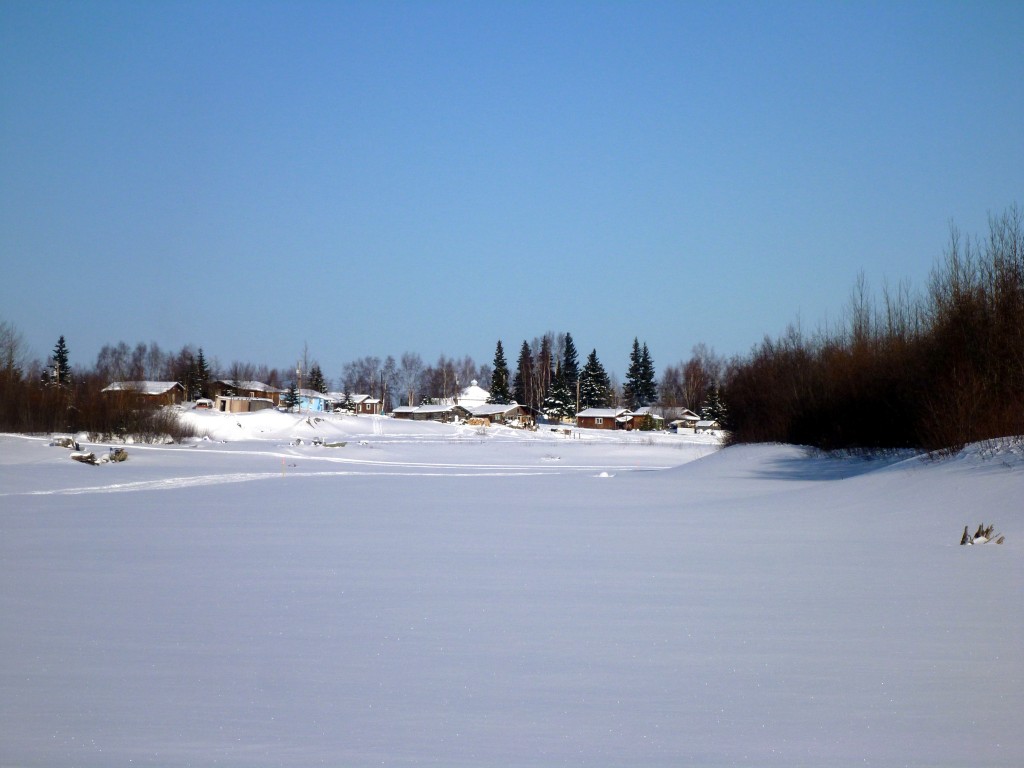 Nikolai! I had no idea where to go, and Nikolai was more spread out than I imagined – especially if you’re extremely tired and hurting (though really it was probably less than a few hundred yards in each direction). I followed Frank’s footsteps but soon they were indistinguishable from regular foot traffic tracks and I had no idea where to go. Fortunately someone saw my confusion and set me in the right direction, and soon Nick, the owner of the house that was our aid station, showed up on a snowmachine and escorted me there. I finally reached the house at 3:20pm.
Once at Nick’s, I was treated to a plate of spaghetti with moose meat sauce – and oh was it ever so good. I couldn’t help but feel a twinge of revenge at the busted trail to Shell Lake as I inhaled two plates of the spaghetti. Inbetween I stuffed myself with huge tasty homemade cookies. Afterwards I crawled onto a real bed in one of Nick’s rooms – the whole family made room for us racers. As I laid on the pillow I noticed a horrible body odor stench and thought they maybe should wash the sheets before I realized it was myself. Amazed at the prowess of my stink, I drifted to sleep …
I woke up around 11pm to find to my surprise that Anne was still there as well. She had gotten hypothermic in the burn and was shaken. “This stretch has tried to kill me twice now!” she exclaimed and asked if I minded us sticking together to McGrath. After the solitude of the burn I didn’t mind at all – we got slowly ready, had more spaghetti and I packed a few cookies to go. It was again around -20F and we expected a cold night as we left Nikoai. We put in a stiff pace, and I expected Anne to pull away soon, but the nearing finish gave me strength and resolve to push the pace. This last stretch was similar to the beginning – rivers, swamps, through stretches of woods and bush, endless and somewhat monotonous. Soon we got to a trail intersection where Nick had told us to not take the official iditarod trail (that had just been broken the day before) but take an alternate route leading to a haul road. All bike tracks went that way and the trail seemed much better so we obliged … We were now far from the GPS track that I downloaded but generally headed in a sensible direction. We made very good time, though I was hungry – fortunately Anne had food to spare for me. A few miles before the supposed road it started to snow a bit and the trail deteriorated little by little. We became very concerned since this trail had very few markers if any, and a snowdump might make route finding very difficult. Most of the tracks of other people already had dissapeared. Finally Anne decided to put on her snowshoes (while I still held out, unwilling to put them back on) – just a few hundred yards before we emerged on the haul road! A road! With … trucks. Big trucks. Fast, big trucks. On a road that seemed paved but covered with packed snow and ice.
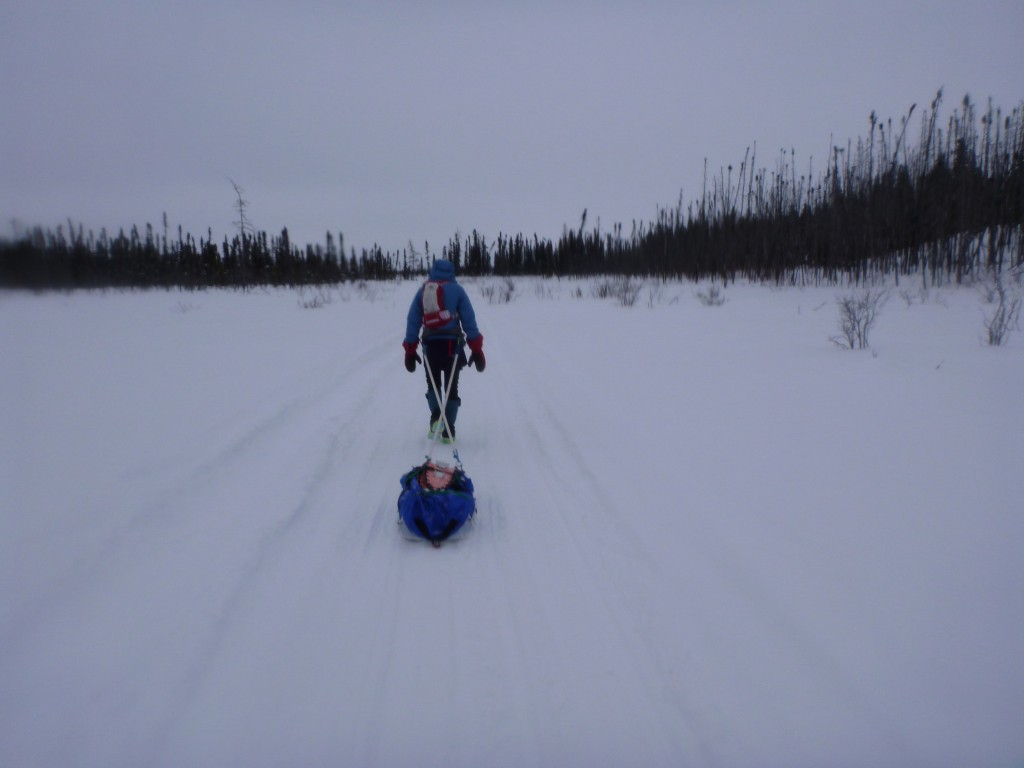 Anne and I are on a mission ... home stretch. As it turns out the trucks had been warned and they were very courteous and friendy. The haul road was about 12 miles long – with maybe another mile to the finish. A little half marathon, on a road, at the end of a very remote 350 mile trek. It was surreal. To make things complete, someone had put up mile markers along the road. Terrible terrible mile markers, since they seemed to be an eternity apart. I convinced Anne we should try to run at least a little to loosen up our legs and we shuffled some downhills. This didn’t have any obvious impact on our speed but kept me a little occupied. The miles crept by tear-inducingly slow – we knew that this would take us 3-4 hours, which seemed almost unfair since we should be done, right?
Finally we left the road and entered town. It was strange to see cars there (they couldn’t really go far since McGrath had no roads leading to it, but the town was big enough for people to need transportation). At 4:20pm we got to the finish line and were greeted by Kathi and Peter – we were 7th overall and 3rd amongst the runners. Though Anne and I were beaming, it was somehwat anticlimactic, something I was familiar with from TDG – you’re so tired and exhausted that the happyness is muted, and lurking feelings of “hum, it’s really over?” do the rest.
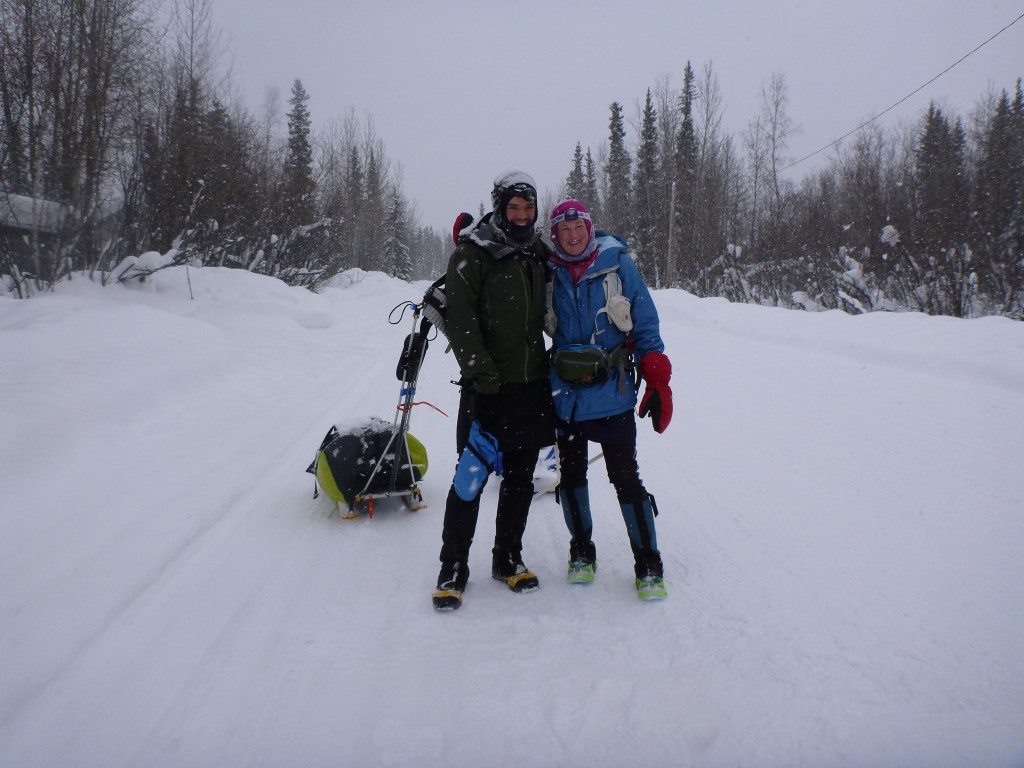 Done! Peter’s house, the McGrath finish line, is famous amongst ITI racers for its hospitality and abundance of food and I was not disappointed! As soon as I stepped in, Peter served me a big plate of freshly cooked food, followed up by more food and a beer. Though I felt dazed and confused I managed to clean up and crawl to bed. I woke up sometime at 2am again to get a drink just to find Peter cooking again or still. He shoved another plate of food (this time a fresh vegetable omelet) in front of me and grumbled “Here, eat!”. Who is to argue … Finally, the breakfast in the morning consisted of the famed MANCAKES – plate-sized thick pancakes. You’ve never had a real pancake until you had one of those.
Tim Hewitt was also there and pondered if he should go on to Nome. He was far behind schedule and his heels were raw from snowshoeing. I tried to coax him on and provided some Leukotape and Hydropel, but after checking the forecast and trail conditions Tim just didn’t feel like going on … and noone did. In this race, not only did we have a record low finisher rate, but from a record number of Nome signups noone went on. Before we headed to the airport a few of us chatted about the race. It somehow came up I had a physics degree and Tim astutely remarked: “If you’re so damn smart, how come your sled sucked so bad?” – very funny man, that Tim. I grumbled about being a theoretician and such, but of course even though he said it with a smirk, he was right. Still I was a little proud that I didn’t give up despite my anchor. Of course we also talked about Nome, and interesting things were said.
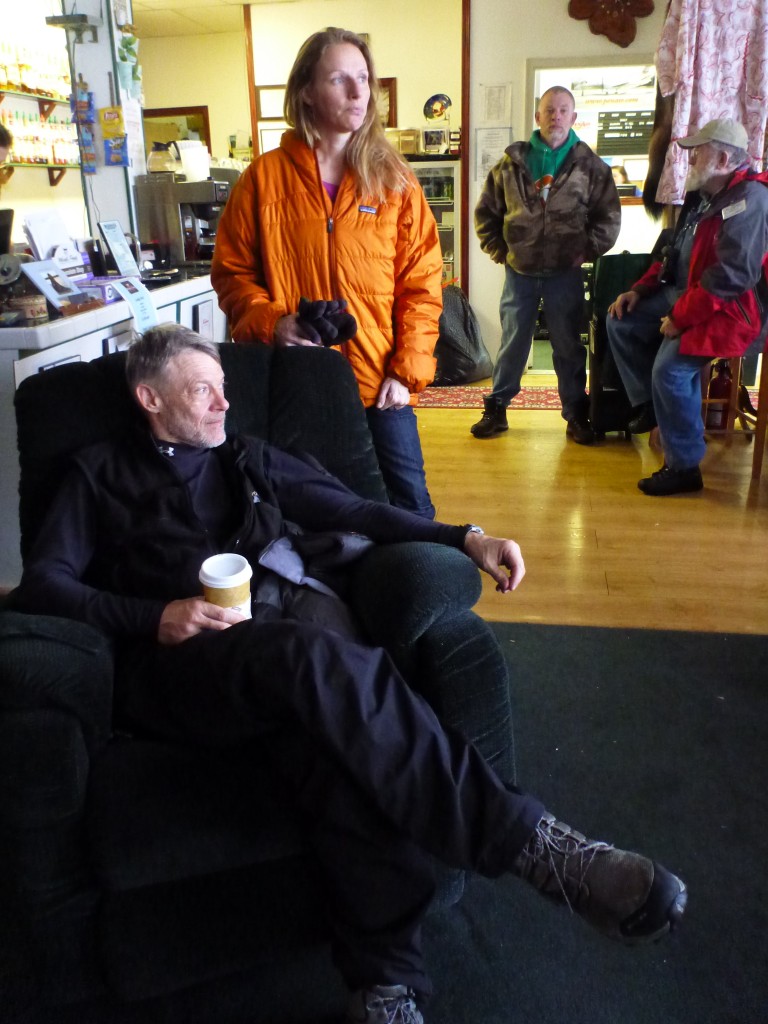 The godfather of the human-powered Iditarod, Tim, along with the boss, Kathi When I checked in the sled at the airport, the weight – without food and with parts of the sled being left behind – came in at a whopping 43 lbs. I hadn’t actually weighed my whole kit before the race (presumably because I would have been scared by what I found). Within two days I ordered a tobaggin-style new sled and my gears are in motion to find ways to lighten my load. Jill keeps saying my old design worked quite well for her in the Susitna, but in the ITI the likelihood of finding abysmal trail conditions is quite high.
Aftermath
During the race, I not only firmly decided I would never do the full distance, but I even thought of quitting the race itself. Yet, looking at the 2013 entrants list, somehow my name is printed there with the Swiss flag, and the words “Foot 1000” next to it.
Beware
I caution anyone wanting to enter this race strongly. Ultrarunners have gotten quite confident in their belief that they can “do anything” or at least “try anything”. This race has little to do with ultrarunning. If you are not extremely well prepared, you will hurt yourself irreversibly. You need to know you react intelligently and promptly in the most adverse conditions. Very very small mistakes that wouldn’t even get you close to a DNF in even a rugged 200 mile race can cost you limbs and send you to the hospital. You are 100% responsible for yourself. If you decide to call it quits, you may have 50 miles of extreme cold in extremely difficult conditions ahead and behind you. Help may not be able to get to you for a long time, at which point you may be an icy meat popsicle. The Susitna 100 doesn’t prepare you for what’s out there, not more than a half marathon prepares you for a 100 miler. By being unprepared and messing up you don’t only endanger yourself, but the people who have to try to rescue you, which can be a dangerous undertaking for them. If you still want to enter it, find someone who has done it and take their advice.
Results
1st place Peter Basinger,Bend Oregon,bike 6 days 15 hours 6th win for Pete B!
2nd place Phil Hofstetter,Nome Alaska,bike 6 days 18 hours 8 min
2nd place Pavel Richtr Czech Republic, bike 6 days 18 hours 8 min
4th place Geoff Roes, Juneau, Alaska runner 6 days 23 hours 25 min first runner!!
5th place Tim Hewitt, Pennsylvania, runner 7 days 3 hours 30 min
6th place Dario Valsesia, Italy, bike 7 days 7 hours 15 min
7th place Anne Ver Hoef, Anchorage, AK runner 8 days 2 hours 20 min first woman!
7th place Beat Jegerlehner, California, runner 8 days 2 hours 20 min
9th place Roberto Gazzoli, Italy, runner 8 days 10 hours 15 min
9th place Cesare Ornati, Italy, runner, 8 days 10 hours 15 min
11th place Rick Freeman, Pennsylvania USA 8 days 10 hours 55 minutes
12th place Andrea Hambach, Willow, Alaska, runner, 8 days 17 hours 47 min
12th place David Johnston, Willow,Alaska, runner 8 days 17 hours 47 min
14th place Ausilia Vistarini, Italy, bike 8 days 23 hours 19 minutes only female cyclist finish!!
14th place Sebastiano Favaro, Italy bike 8 days 23 hours 19 minutes
16th place Billy Koitzsch, Anchorage, AK, bike 9 days 5 hours 15 minutes
17th place Shawn McTaggert, Anchorage, AK, runner 9 days 7 hours, 45 minutes
18th place Dave Kelley, Anchorage, AK, bike 9 days 13 hours 45 minutes
47 starters
Splits
| Checkpoint |
Time_IN |
Time_OUT |
Rest-time |
Run-time |
Speed |
Commentary |
| Knik Lake |
02-26 14:00 |
02-26 14:00 |
00:00:00 |
|
|
|
| Yentna Station |
02-27 22:00 |
02-28 03:40 |
05:40:00 |
32:00:00 |
1.78 |
Oh crap |
| Skwentna Roadhouse |
02-28 18:20 |
02-29 00:03 |
05:43:00 |
14:40:00 |
2.25 |
It’s hard |
| Winter Lake Lodge |
02-29 19:15 |
03-01 03:25 |
08:10:00 |
19:12:00 |
2.08 |
This sucks |
| Rainy Pass Lodge |
03-01 17:00 |
03-01 23:08 |
06:08:00 |
13:35:00 |
2.58 |
I’m flying. Haha |
| Rohn |
03-02 13:45 |
03-02 18:45 |
05:00:00 |
14:37:00 |
3.08 |
Wheeeee |
| Nikolai |
03-04 15:18 |
03-05 01:10 |
09:52:00 |
44:33:00 |
2.02 |
Alaskan snow snails overtook me! |
| McGrath |
03-05 16:20 |
|
|
15:10:00 |
3.30 |
Finally moving a little |
Apologies for the delay … those pesky races get in the way of writing. And work. Tsk.
Playtime
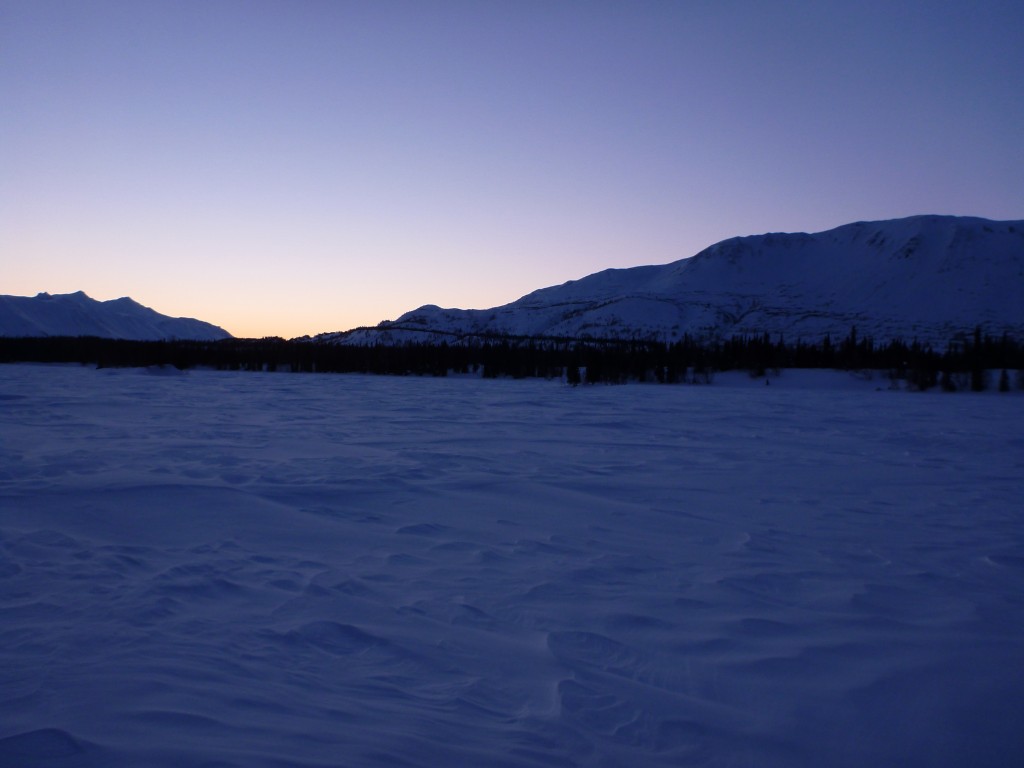 Sunrise on the way to Puntilla We all (Dave, Andrea and I) were quite done when we got to Fingerlake at 7:15pm. I got into the large kitchen and plonked down. Fingerlake is a luxury lodge, but racers are relegated to the kitchen, an annex building with some wood bunks and a stove and the annex outhouse … but still, it was luxurious. The food was simple, a chicken burrito, but fresh, not greasy and oh so tasty! Dave ordered us each another burrito for $5 a piece (quite the steal out here), and we had some beers and decided to sleep a few hours until 2am and make our way to the Rainy Pass Lodge at Puntilla lake. We spent quite some time to organize our stuff and replace supplies from our first drop bag. Although before the race my right achilles had hurt me, I noticed a squeak in my left achilles when I moved my ankle – something that usually indicates inflammation and so far has always spelled impending doom.
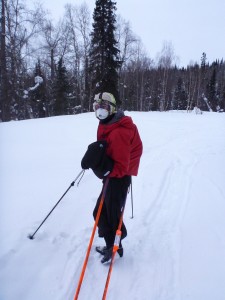 Dave, member of a distant brother tribe of the sand people. I was alarmed – although the tendon didn’t hurt (until I massaged it too much) I was afraid I would soon be done for. There are few things that make me quit a race, but the achilles is not to be messed with, as tears or even full ruptures can come suddenly and are devastating. I called Jill and told her our plans and my worries – it was good to hear her voice. The annex building was cramped but I went to sleep quickly, only to be woken up by Phil Hofstetter’s extraordinarily loud snoring – he happened to hit a resonant frequency in the small space and I could feel the vibration of the air. I still felt bad for shaking him, fortunately he didn’t care as I can tell from his race report. In the morning we all took our time, had a lot of coffee and I taped my achilles with Kinesio and Leuko tape – I didn’t think it would really help all that much, but why not try. I also made a heel lift, though in the snow your foot generally goes through much larger ranges of motion, which poses problems for many people not accustomed to it (like me). We left Fingerlake at 3:25am, after 8 hours of rest though it didn’t feel that much by a long shot, partially because we probably only slept 4 hours. Still, we were anxious to be on our way. The trail to Rainy pass was supposedly good, and we strapped our snowshoes to our sleds for the first time. I pondered the fact that we were barely over a third into the race – without my 200 mile Tor Des Geants experience I would have seriously doubted at this point I would be able to make it at all. Even so, the task seemed daunting. But I broke it down, as you always do – pick small goals, sometimes even minor landmarks (like the Happy River steps on this section). The less you think the better, really. I was impressed by Dave’s ability to go at Andrea’s pace, something that is not easy to do (by himself he’d surely given Geoff a run for his money – Dave is as strong as an ox, and these conditions would have favored that strength), and Andrea for doing this in the first place – her only 100 miler before this was Susitna last year.
Of course, Jill had been similarly unexperienced, and been mostly alone during the race. That was pretty kick-ass. And a little naive. The first miles of this section were delightful – we were moving quickly, and the trail was fairly decent (I am sure normally it would have felt punchy, but one could walk, and in comparison to what we experienced before it was heaven). Not wearing snowshoes made us whoop with delight. After a few miles we hit the snowdrifts, and indeed they were fairly enormous.
We started to wander all over the place, following others who apparently did the same, I could see we veered a bit away from the markers but not too far – but it got almost a little exciting. We emerged on a lake or swamp but I could see a marker where the trail went back into the woods and aimed for it. We had been postholing for short sections, then on the trail again, and now we were finally postholing long enough that I strapped the snowshoes back on. Andrea could somehow manage to just walk over this, but I didn’t want to waste too much energy. Fortunately the section was probably less than a mile long before we hit more reasonable trail again. All in all we felt we moved quite quickly, and shortly after sunrise we got to the fabled Happy River steps which led down to the Happy River. I was initially worried I might get lost onto a mining road which was the supposed Iditarod route this year (though that didn’t happen in the end), but we never noticed it. The steps are a sequence of fairly steep but short descents, and to be honest they were steeper than I thought.
 Happy river steeeeeeeeps! Here my sled design proved an advantage – it stayed behind me straight as an arrow, whereas Dave and Andrea’s sleds overtook them and tried to escape down the mountainside. Of course letting the sled go first would also have done the trick here. It was fun to max out and speed down the steep sections, barely in control, and for the first time in this race we had pure and simple fun, Dave and I were laughing at (no, with, with!!!) Andrea sliding down some of the steps on her butt. Soon we got to the river, and predictably the trail disappeared within a few yards. Fortunately someone had set the route and after another few hundred yards of postholing we got to the “wall”, the steep climb back out of the river. It was steep indeed – I could barely pull my behemoth sled up the hills. I thought of Jill hauling her 70 lbs bike up these same trails and exclaimed “Man … I can’t imagine this with a heavy bike. Jill is a stud!”. Dave laughed, and said some bikers would make multiple trips up these hills, which was infathomable to us. There were more very steep uphills than I expected, but we all were in great spirits anyways – the change in terrain really made us forget most of the misery of the past few days, and I felt I knew why I worked hard – I achieved little by little the pass, and it felt rewarding. We soon passed Shirley Lake, where I sent Jill a text message and we decided to have a snack. I think it was just around that time that Pete and one or two more riders overtook us (as it turned out for the last time), and I told him I wouldn’t want to see him again. Shortly after I was passed Dave caught up from behind, exclaiming “I got caught with my pants down!”.
Apparently he had a bit of an upset system, which caused a sudden urge. He explained it this way: “Matador my friend no more!”, basically blaming his beloved beef jerky for his issues. He then offered me some – Dave sure is a funny guy. The remainder of the section contained a lot more climbing than I initially expected, but the trail was rather fun. We could see into a valley to the right, and we were decidedly in mountainous territory now. The trail had various sections of overflow ice and some unstable areas over alders where caves in the snow underneath can let you punch through hip-deep – we saw many holes in the trail but fortunately we were spared. The terrain became rolling with lots of short but steepish ups and down, and I started to get very fatigued again – the initial exuberance had worn off, and the little muscle in my back started tormenting me once more about halfway. Still I was excited that we went towards the pass which held particular attraction to me – I really wanted to cross it. My achilles seemed to hold up, fortunately, but the decision to go over the pass is not to be taken lightly and although I knew I would go on for sure, I wondered how wise it was to do so.
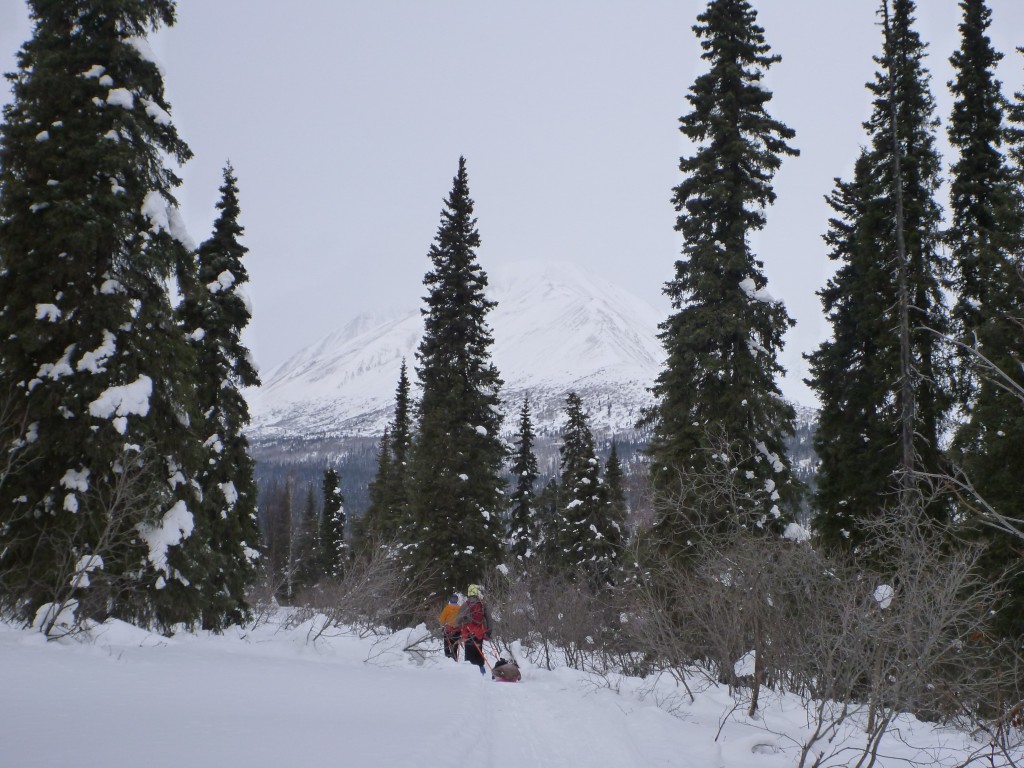 Uh, mountains!!! The final six miles were rather difficult again, the thought of spending another two hours on the trail was challenging. I took numerous rest breaks but couldn’t really recover, so I resorted to grilling Dave and Andrea about their lives and tell them my own stories just to keep myself a little distracted and entertained. As usual Puntilla Lake did not emerge until we passed numerous spots that surely seemed they could be the lake, but eventually we made it at 5pm. I knew from my GPS the direction of Rainy Pass but it was overcast and grey, and the entrance to the pass loomed ominously across the lake. Just before we got in we saw Rick Freeman leave and we had a nice chat, he was in great spirits and it really lightened my mood at that point. At this checkpoint we had a cabin where the race provided some canned soup, pilot bread and hot chocolate mix (and, of course, Tang, which appears to be an important staple in Alaska. Hot Tang. It’s actually quite good when it’s really damn cold outside.).
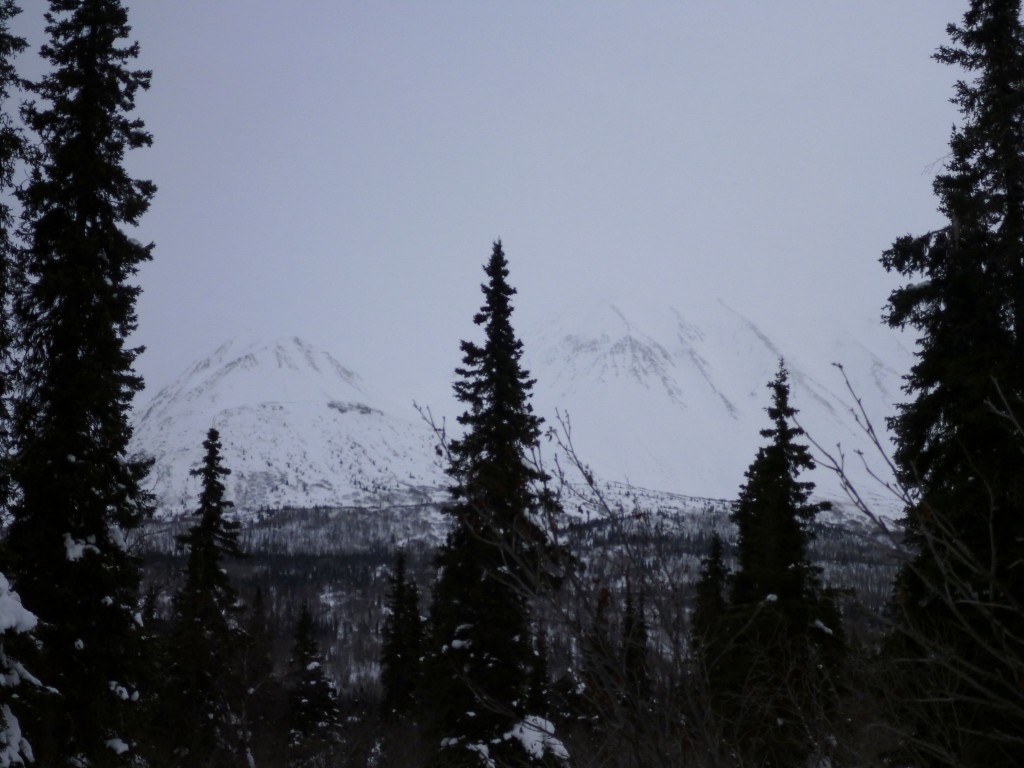 Promising! Very promising. And a little scary. We found Anne there and the remaining skier, who would quit here (as I heard later due to busted up feet) as well as Pavel, a very nice biker (with an awesome titanium fatback) who would end up tied for 2nd. Geoff and Tim Hewitt seemed to be locked in a race now and had left earlier but were not terribly far ahead. Anne asked me if we wanted to leave together around 11pm and I agreed, even though Dave and Andrea wanted to sleep longer, I figured I wouldn’t need quite as much sleep and it would get me to the pass around sunrise. So after at most 3 hours of sleep and eating a bunch of energy bars and trail mix left behind by other racers for breakfast, Anne and I left towards the pass. The first section across the lake was fairly bad, but I hoped for better trail later and didn’t want to bother with the snowshoes just yet. Just after the lake I noticed that my pole attachment to my sled had failed on on side, and I stopped to inspect it. Anne was in the zone and continued on, which was fine by me, because I sort of wanted to do the pass by myself. It turns out a screw had basically
 Puntilla lake ... straight ahead is the beginning of the ominous Rainy "Foggy" Pass. been ripped out of an aluminium pole but I was able to fix it with a Voile ski strap (don’t leave home without one!) and soon was on my way. The way up to the pass was strange and eerie – basically in a what seemed wide valley mostly without trees but at a steady incline broken up by short flat sections. The trail was so-so, still walkable for the first few miles. I made numerous stops to adjust my food, gear, put on wind protection and more layers since the night turned out to be windy and frigid. It was snowing, too, and I couldn’t see very far, the whole ascent had a strange vibe, I kept thinking about mountaineers making their way up a dangerous mountain in a desperate situation (though of course there was no such danger). It definitely had a tiny bit of Shackelton/Hillary vibe, which was scary and delightful at the same time. The going was very strenuous though, all that said, and my back predictably started hurting after a few hours again. The Pass Creek crossing was pretty much a non-event here, particularly a good crossing had been set by Craig, the Alaska Dispatch reporter, on a
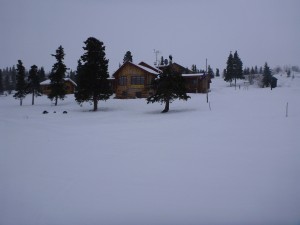 Rainy Pass Lodge - "Your adventure vacation spot". snowmachine (apparently Tim and Geoff took a more sketchy crossing. It was as easy as walking on a trail really, and the bridge looked very solid, though one never knows – anyone could at any point punch through, and this creek was fairly major. Again I could not believe that Jill actually had to wade through the water here lifting her bike across the creek, it seemed incredibly frightening and scary (though particularly more so at night). The second half of the ascent became markedly steeper and the trail required snowshoes again. I kept following Pavel’s wheel tracks and Anne’s snowshoe prints (since we have the same brand that no one else here used, it was very recognizable to me). At some point I noticed that I seemed to be significantly higher than the ravine which we should be following, and that there were no more markers to be seen. Anne had not turned back so I figured it would be fine though mental references to lemmings all following each other to their demise flashed in my brain. The terrain became steeper and rockier and I was about to look for a way down when I saw Anne had herself turned a different direction, down the hillside back towards where I thought the trail ought to be. The descent was quite steep but on very solid crust, and soon I saw trail markers. On a large open area, possibly a lake in the summer, her footsteps veered to the left along with a few others, and I followed them until I found the Rainy Pass cabin. Since it is private I simply passed it by and veered back to the right direction. After another similar excursion to the first I finally found the real trail (I had missed the Rainy Pass sign though) and caught up with Frank Jenssen who should have been quite a bit ahead of me. As it turns out his snowshoe had broken and he had hurt his knee a little. He said he didn’t need any help but I walked with him for a while down into the Dazell Creek gorge. The sun was now just rising and the views on the pass were incredibly spectacular – a truly wild and remote place. I was ecstatic and called Jill, as I told her I would. In a way having the ability to keep in touch may have removed the sense of adventure a little, but it did nothing to diminish the extraordinary beauty of the course, and being able to talk to Jill who had been here before on her own life-changing adventure added a different kind of emotional value to my own. Also, holding this ruggedized 80s (ok late 80s to be honest) Nokia style phone made me feel rather cool and bad-ass, just like the characters in an mountain-adventure-drama or action movie.
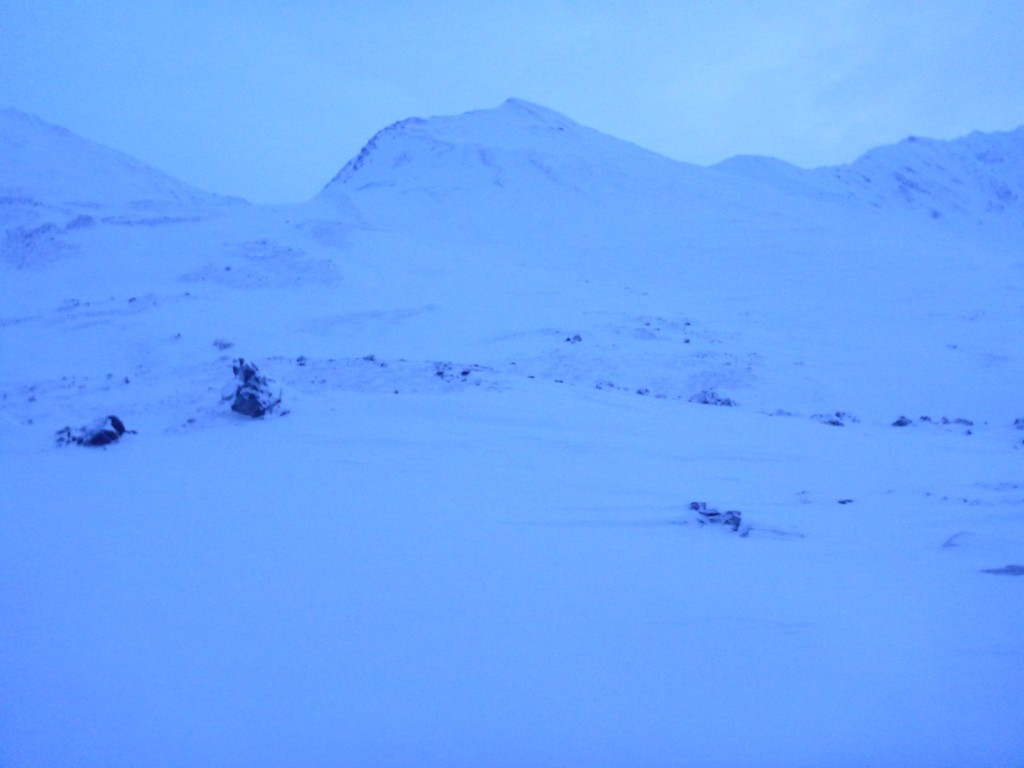 Dawn on the pass ...!
 - Beat Jegerton
 - More Rainy pass …
Frank soon overtook me again as the trail became good, and I took off my snowshoes and enjoyed the downhill fun of the gorge. I now entered the interior, a place of great desolation, remoteness and adventure, ranking fairly high in the overall echelon of wild places. The trail crossed the creek many times – the bridges were all in great shape and I could only imagine how this would be if they were in worse shape. The creek became increasingly bigger and overflow glare ice increasingly more prevalent with more and more somewhat sketchy passages. I wondered if I should have worn my waders preemptively but I had a lot of equipment in case I got my feet wet, and it wasn’t terribly cold. Finally, after a long time, and after my energy had again left me and going had become increasingly tough, I emerged on the Tatina River. As it turns out, that river is basically a wind tunnel, and as such I was greeted by a stiff wind, which was very frigid, and basically a mile of bare ice. I didn’t feel like putting on my snowshoes and the ice wasn’t wet, so I simply walked very carefully without sudden moves. There were a lot of pressure cracks and bulges in the surface, and every once in a while the sound of my footsteps changed alarmingly. I tried to stay clear of any obvious dangers and mostly followed faint snowmobile tracks (that’s gotta be a fun ride …). Still it’s hard to shake visions of breaking through the ice … and that is entirely possible too, and happens to racers occasionally. Trails change and fast snowmachines can go over weak spots without breaking them … After a while it got cold enough I decided to put my down jacket on so I could cozily cruise into the Rohn checkpoint, which I reached at 1:45pm. So far the interior lived up to its promise, and it didn’t let up when I got to the camp. The aid station guys, Bill and Rob (Rob having completed the ITI on foot himself before) had put up a dead wolf at the entrance of the Rohn aid station (he had been killed by other wolves apparently). They were quite proud of it, unfortunately I was too excited to get to the station to
Sunrise! I wanted to stay there. 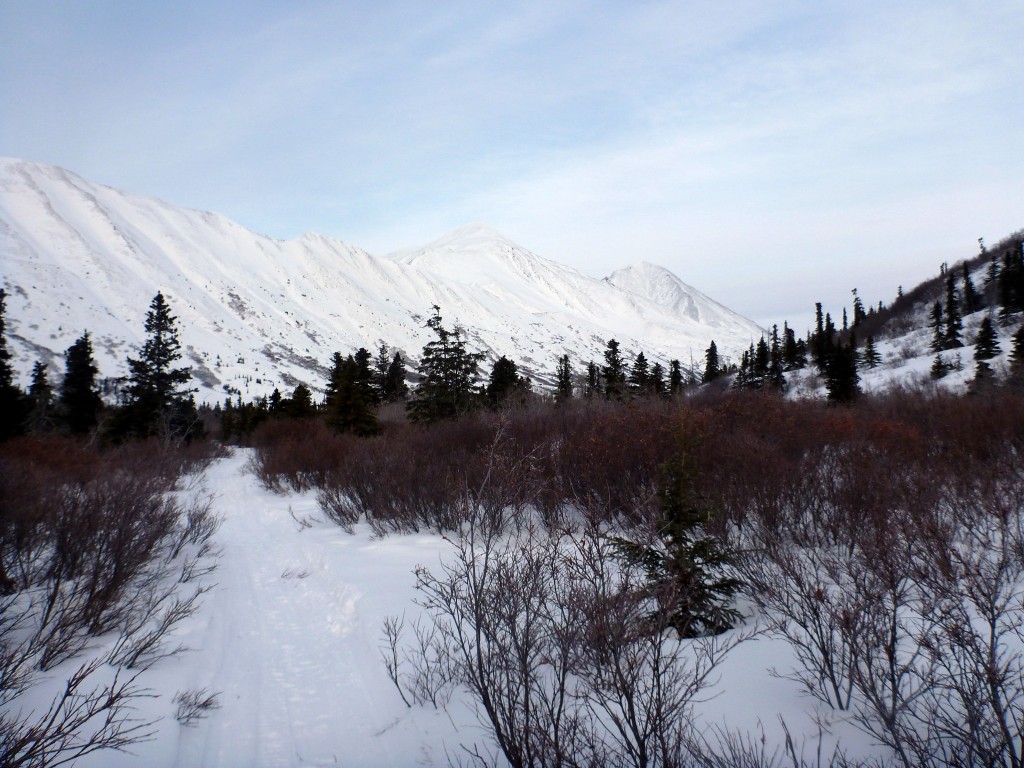 View back to the pass from the Dazell gorge. 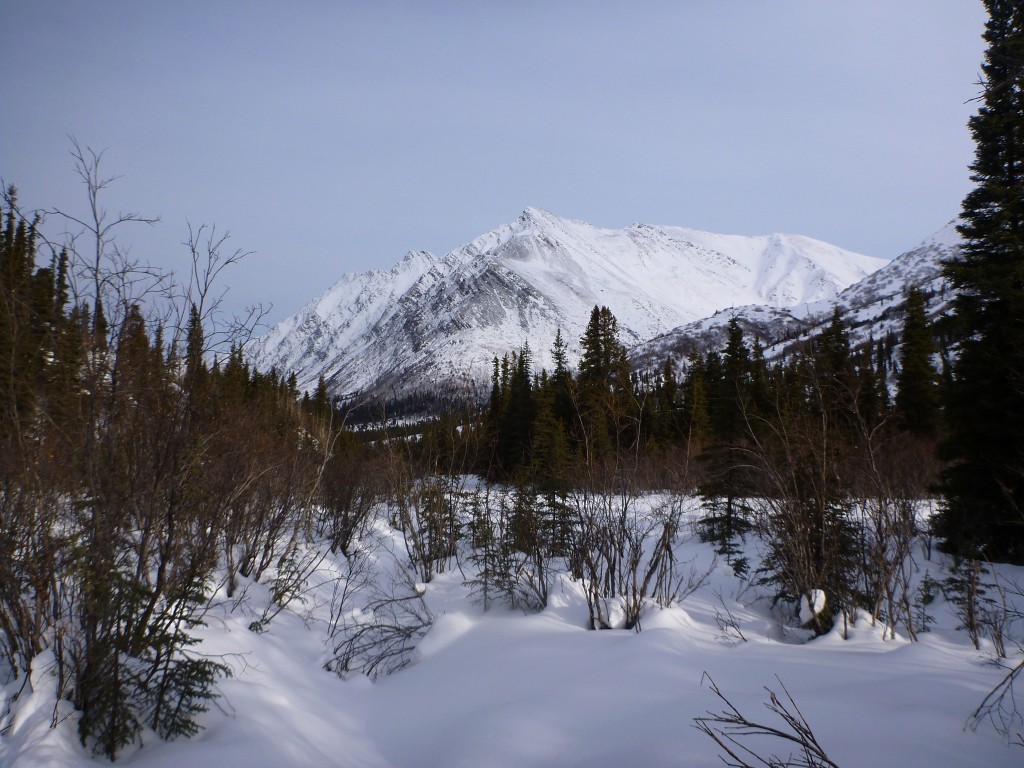 Lower in the gorge ... 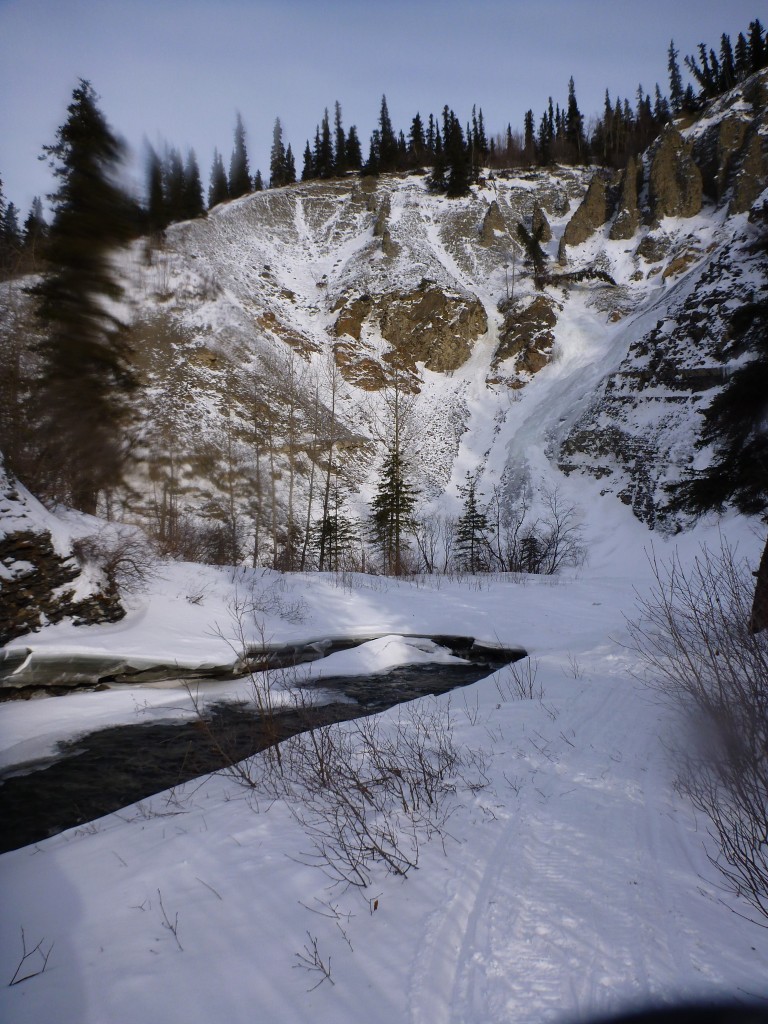 We crossed the Dazell creek many times ... bit unnerving.  Creaky ice.  I'm unnerved. take a picture. The station was a wall tent with a stove and a surprisingly effective pine-branch covered snow bunk area. Fortunately not too many racers were there – Anne, Rick, Frank and later Dario – so I could claim a spot in the heated tent. Rob was excited to meet me since he had decided that my name was the best in the whole field this year! We had a great time chatting, and just a bit later Mike, Anne’s husband, showed up, helping out as well. He is one of the institutions in this race, with a plane doing emergency evacuations, keeping track of racers, breaking trail between Skwentna and Fingerlake, helping in Shell Lake, Rohn and Nikolai, flying unused drop bag supplies to Nikolai for the villagers to use an so on.
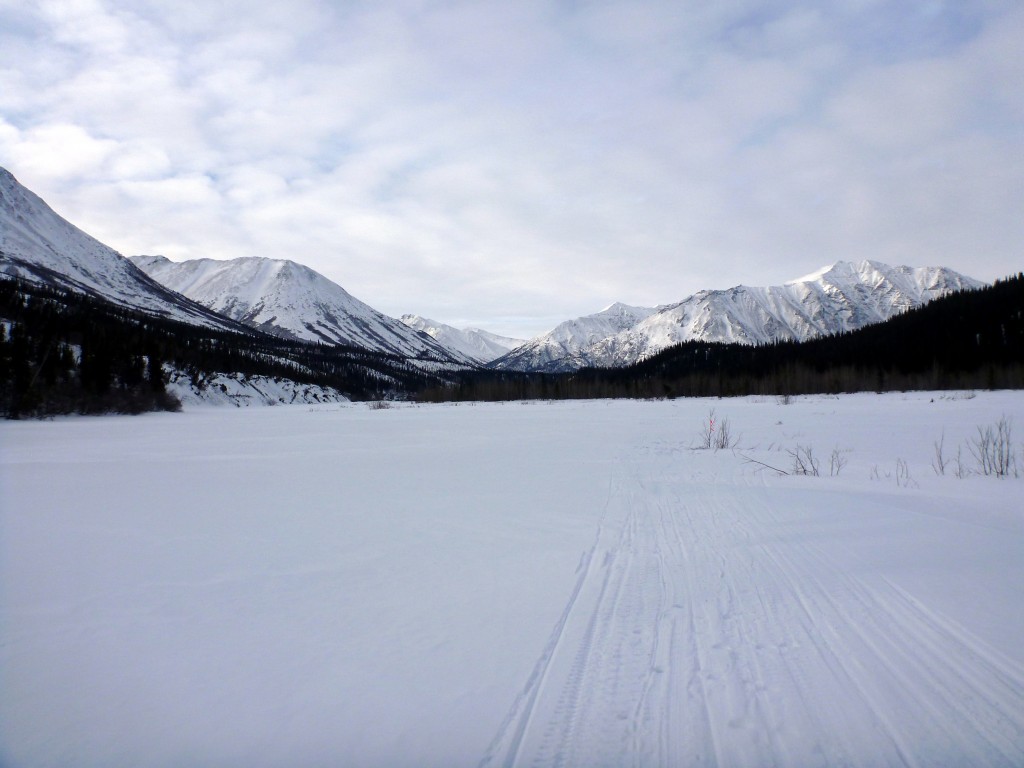 On the Tatina river, looking into the range. 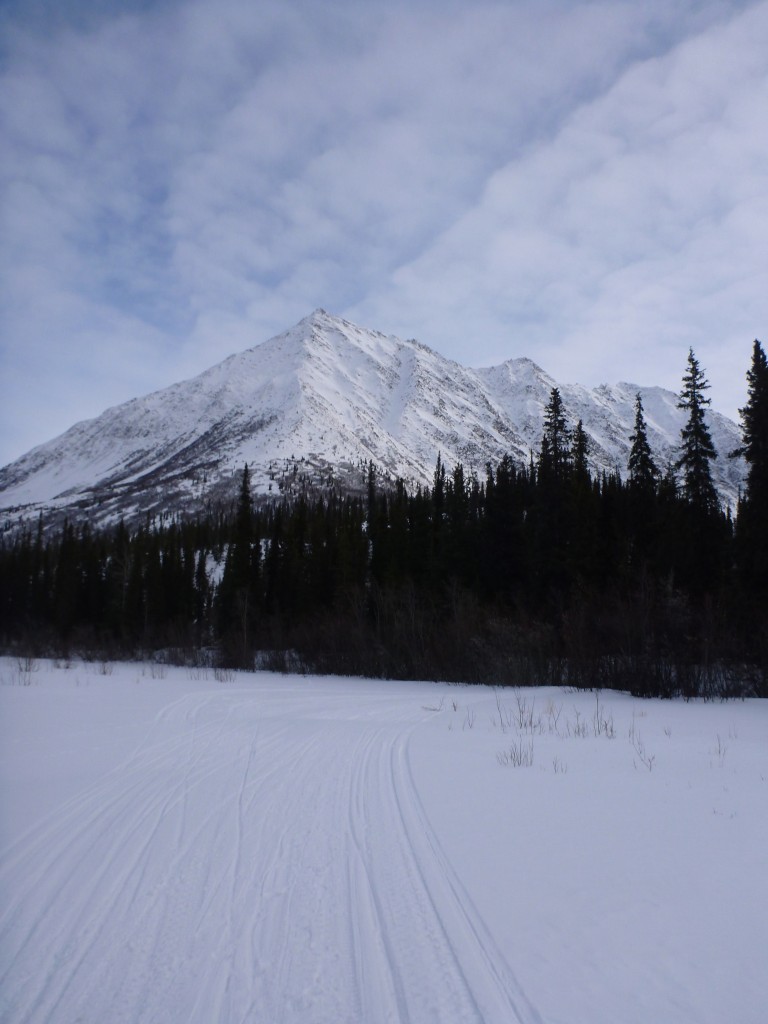 Super awesome mountains. 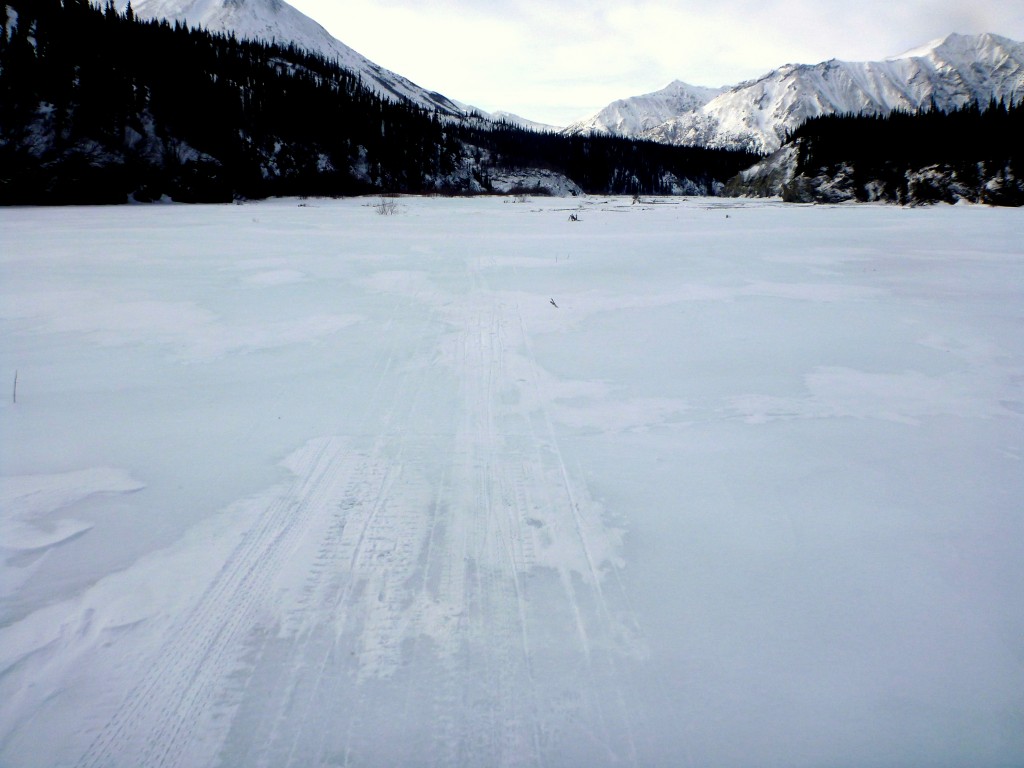 Glare ice as far as the eye can see ... no sudden moves! Since I got to Rohn so early I didn’t want to sleep since even with sleep I would get tired around 4am anyways, so I stocked up on supplies instead (there was also a huge box with the contents of the many unclaimed drop bags of all the DNFs) and planned to go until about 3-4am, then bivy. I hoped to get to the Farewell lakes in that time. Anne, who left quite a bit before me, planned to push right for the Bear Creek safety cabin at mile ~55, a very significant undertaking. Even without much rest I spent 5 hours in Rohn before I finally left into the waning light.
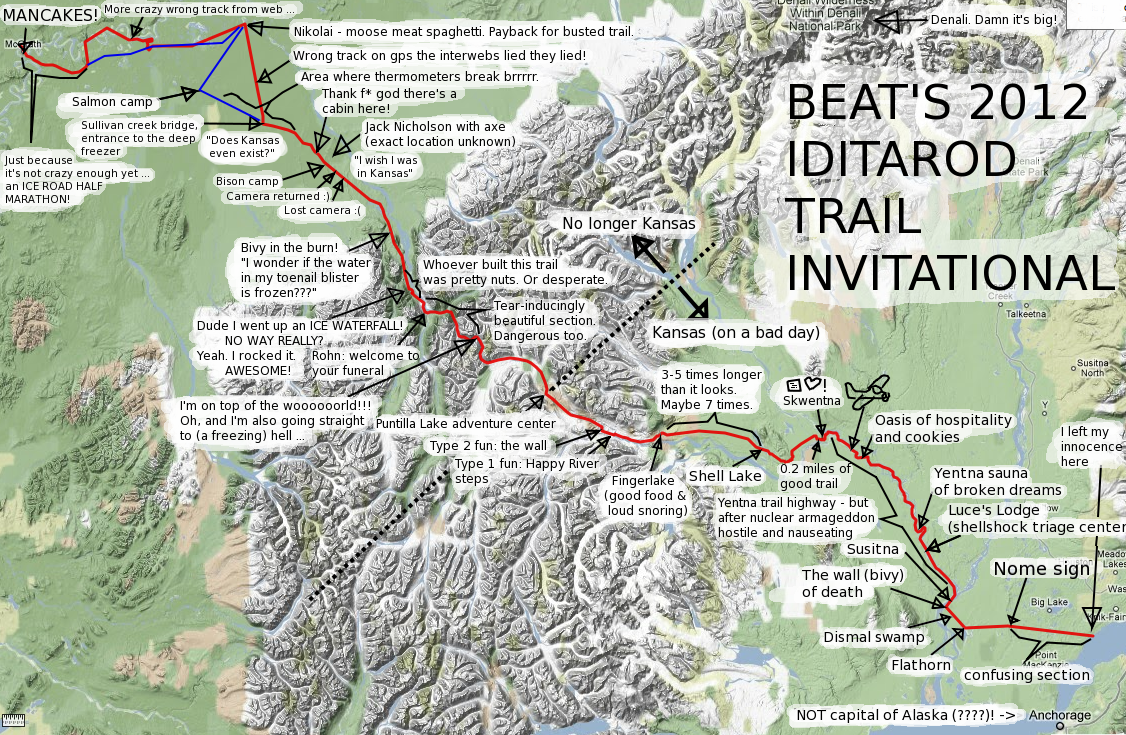
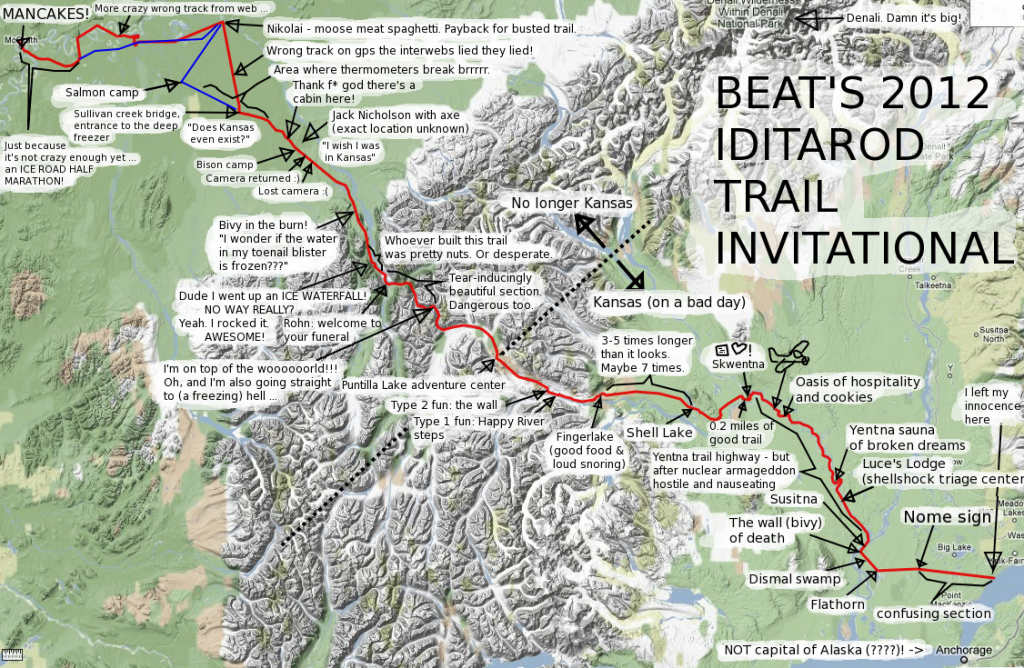 For the essential parts of the race, enlarge this map! I picked up my packed sled, and my heart sank. “It’s too heavy!”, I exclaimed. Jill tried to console me “It’ll be fine. It’ll glide well on those trails and you won’t even notice.”. Still … it’s been the first time that I’ve actually packed everything into that huge bag. I’ve made lots of last minute changes. And I didn’t follow through on my plan to organize the sled smartly either. I felt unprepared and had battled some weird hip flexor pain the previous couple of weeks as well as pain in my right achilles, both of which could easily be a huge liability in this adventure. I had little training time on snow, and I knew how much more ones tendons are taxed by this terrain. I had a distinct feeling of impending doom … nothing good could be in store for me.
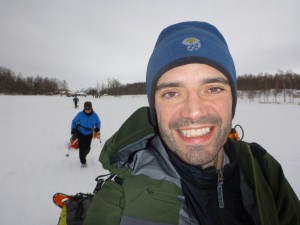 Life is good! Shawn right behind me. Pre-race dinner was spent discussing gear and strategy with Geoff Roes who attempted the ITI for the third time (second, to be fair, since one DNF was due to a severe cold already present at the start – -30F quickly turned that into severe bronchitis …) and Joe Grant who had finished Susitna a week earlier. Despite the difference in our capabilities, there was a lot to talk about. Turns out Joe and Geoff are really cool guys with a real love for running – they just happen to be a lot quicker at it than me when they do it. At least Geoff didn’t go superlight either on this try, with the main objective to finish the race. My take was that if he finished, he’d win, despite his conservative approach. As usual I was right about that one. I also cautioned Anne – fruitlessly – to not win the woman’s race so she wouldn’t get a free entry for next year …
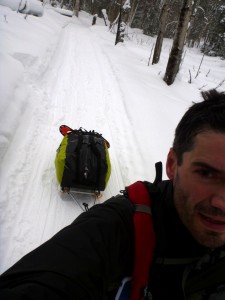 My behemoth sled. Monstrous. After a good night’s sleep in a hotel in Wasilla, a decent breakfast and short drive to the start, we were ready to go. My sled was surely the funkiest looking amongst all of them, though a Canadian with a 60 lbs sled beat my estimated 44 lbs packed weight. Anne, on the other hand, clocked in at ~30 lbs. I was envious. The night before I had visions of the start happening and all the competitors moving away while I stood there pulling against my anchor, unable to move. Oh, pre-race nerves.
And then just like that, we had started.
The Wall
To my delight, I was able to keep up. I even walked and chatted for a few miles with Geoff, who was taking it decidedly VERY easy, showing impressive restraint. The trail was so-so, a bit punchy but you could shuffle. I was anxious to stay within people’s sights at least until the Nome sign, after which I thought I could follow the Susitna course to the Yentna river easily. The temperatures were pretty warm, I believe almost in the 30s. The valley had gotten a snowstorm warning the night before, but in the morning our car had only minor snow buildup – so maybe the trails were still in top shape like they were for the Susitna. Or so I hoped. After about 6 miles, after a nice chat with Rick Freeman, who was planning to go to Nome, I decided it was time to give snowshoes a try. The trail had gotten just punchy enough to be annoying and make my legs ache, and I thought the stability of snowshoes would prevent premature issues with my ankles. This improved things considerably … however the trail kept on getting worse. I finally caught back up with Anne who also donned snowshoes, and I did my best to keep up with her. After the Nome sign, the trail started to deteriorate further. It was now significantly more strenuous to move. However, we hoped to catch a cut-off trail around Flathorn lake that would save us a few miles, and also make for easier going through the woods. Going was frustratingly slow, but I figured once we got to the river, with its massive snowmobile traffic it would be ok. Oh how naive.
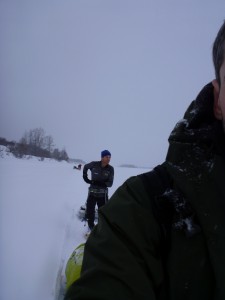 Slogging with Geoff Anne and I emerged on the slough that would lead to Flathorn in the dark. The trails now seemed to be freshly broken by the people before us. My sled, due to its width, didn’t fare well on that terrain, causing lots of drag and even worse kept tipping on its side a lot. We first tried to spot the cut-off by going straight across the slough, but it became apparent within a few hundred yards that there was no trail, and others had simply turned around. We decided to look for the cut-off a bit further down. We went back to a bad trail that led onto the slough. Following it, we soon came across another turn-off heading up onto ground via a steep bank. However, within another few hundred yards Tim Hewitt and Geoff Roes and another person came towards us – “There’s no trail. It’s hip-deep.” Tim explained. We turned around to follow them onto the Lake.
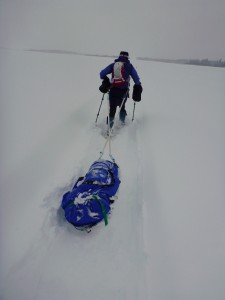 Anne in the lead on the Susitna. Not exactly "running". Once we got to the lake, there was no apparent trail. We could see headlamps in various directions, some to the left, presumably from bikers taking the gasline trail, some straight ahead far onto the lake (which seemed rather dangerous). We decided to keep relatively close to the shore, which was where the Su also had its course. A biker – Phil Hofstetter – came towards us, exclaiming he could not go on, and we took the lead, having a better chance with our snowshoes, and Phil followed us. We tried to follow snowmachine trails, but only faint ridges in the snow indicated the possibility of a trail – going was tough, skinking in knee-deep – however off-trail was even worse. Once we got to an airstrip we lost the trail altogether. Tim simply headed out in the generally right direction which I confirmed with my GPS, and we took turns breaking trail until we finally got into a very bad trail that had presumably broken by bikers. Bike trails unfortunately don’t do much for snowshoeing – they’re too narrow, with deep holes from the boots and a shallower soft tire track – making for some very awkward going. My sled dragged like crazy and I was working close to my max for a lot of the time. After a few hours we finally came to a swamp and could spot the trail marker which would lead the way to the dismal swamp. After following more false trails, we finally got the direction right. We still followed a few bikers, and soon we overtook them. It was the lead group, led by Pete Basinger. They quietly stepped aside while we quietly passed. The swamp was a horrible mess. It’s wide, without a well defined base, and we kept taking turns breaking trail with a variable base. Finally we got close to the Wall of Death that led onto the Susitna river. Given it was now very late, like 4am or so, we figured we could as well bivy.
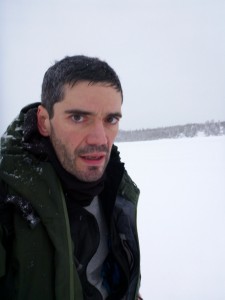 I'm wiped out - not even 50 miles in. My feelings about the trail at this point were strange – on one hand, I was in an almost silly mood about the incredibly slow and strenuous race, but because everyone was in the same boat (though I would think that Geoff operated at a significantly lower percentage of his capacity than me …) it did not really phase me that much yet. Somehow I believed if the river was better, this would just be one big fun adventure, something to tell your friends later. Despite being quite exhausted, I felt ok. I sent a quick message to Jill on my sat phone: “bivy wall death w anne geoff david and more were lead group breaking trail overtook pete”. I though it was pretty cool at the time.
Temperatures were not too cold, probably above 0F for sure, possibly even above 15F. The bivy was warm but everything was sort of wet, and I was sweaty. I somehow didn’t have an easy time breathing. After two to three hours, Anne exclaimed that she would get going. I had not gotten much sleep, and I didn’t feel comfortable so I figured I could go as well.
Emerging on the Susitna, my heart sank. The river was just as bad as the swamp, and moving was very slow. Anne and I took turns in the lead, following a badly broken trail. Soon enough Geoff caught up with us, and we once again overtook the lead cyclists who had moved on earlier. The bikers looked shattered and broken. This was supposed to be the easy section. Geoff joked that at this speed, it would take us a month. We started talking about dropping out. Geoff’s thermometer read 35F, which meant that trails wouldn’t improve either due to the warmth.A water stop turned out to be only moderately productive, melting snow took forever and I caused big spillage with my stove. My morale was on a steep downward curve – fatigue, slow going, and I felt utterly inadequate using my gear. My sled was a mess and one ziploc bag of pringles had burst and just added the icing on the cake.
After the water stop I fell behind Anne, Geoff and Tim and even Dave and Andrea, and continued onto the Yentna – which should have been the highway of the race. But same thing – not a single snowmachine had come through or was to be heard, and the trails were abysmal. To make things worse, my sled tipped over every two to three minutes, and i had to undo my harness to set it upright. I wanted to sit down and quit. Right there. Sometimes I would drag it on its side for a few hundred yards just to spite it, but the joke was on me anyways. I felt sorry for myself, and stupid at the same time.I was alone now, and my morale had become very low. I could no longer envision this being doable physically, I hated the thought of chasing cut-offs and the whole adventure did no longer feel fun, it feld infinitely tedious. I was on the stupid rivers on a course where I had been before, mere 25 miles straight line from Anchorage, there was no real danger (though that of course was not true – snow can cover up nasty overflow and cracks …), just tedium. I felt it was unfair, silly and stupid to push on the Susitna course for a few days just to time out anyways. My mind was in a very bad place. I finally took out my sat phone and called Jill: “I am not sure this is doable for me. I think maybe I should quit. My gear is not adequate. This could be dangerous.”. I had a compelling, rational reason to drop laid out for myself. Still, it felt good to talk to Jill, get her support. Despite all of this I knew I was not actually going to quit. Deciding to quit is a measure of last resort for me, a mental crutch that makes the task at hand more bearable. It allows me to more effectively break up the task into small pieces. I could always defer the quitting until later, the next checkpoint. If it’s one thing I’m good at it’s procrastination. That said, I wondered how I would recover from the physical exhaustion I felt at this point. After an eternity I reached Luce’s. They’re not a checkpoint, but open for business and a welcome stop to refuel and relax. Geoff, Tim, Anne were there, and a lot of bikers came in later including Pete Basinger and Jeff Oatley. I explained to Geoff and Tim that I probably shouldn’t continue on. They didn’t have much energy to argue. Everyone at Luce’s was shattered and tired, yet sort of giddy in disbelief at the slow progress we made.
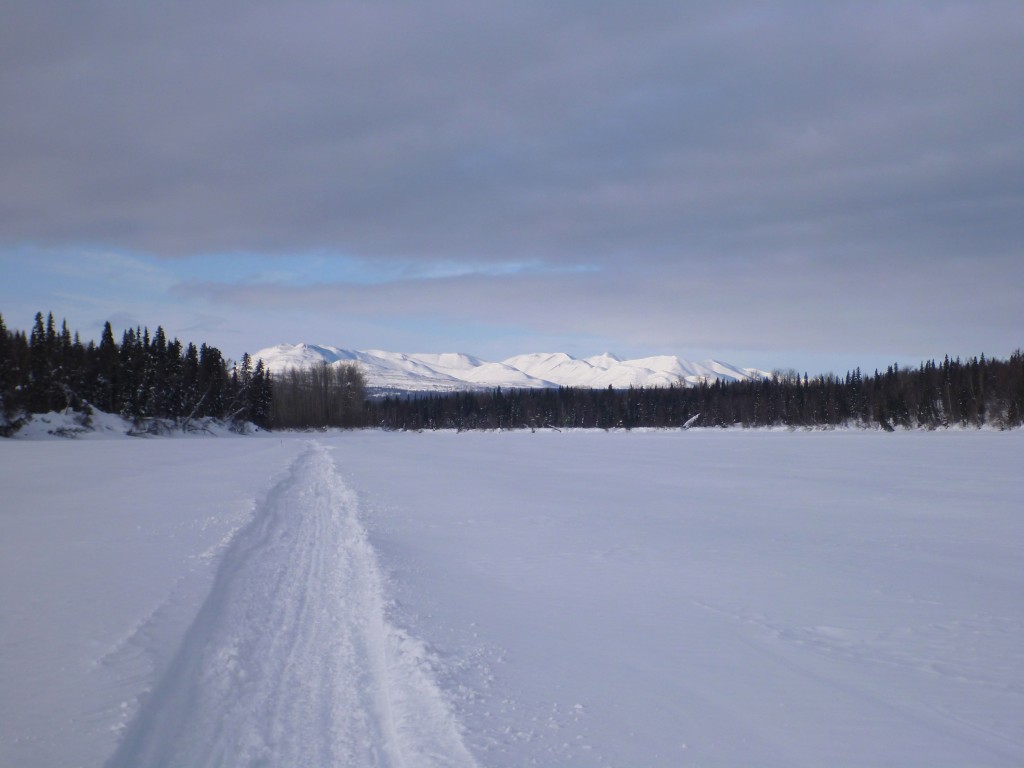 Beautiful scenery, bad trails. En route to Skwentna. After lots of food, I felt somewhat refreshed. I left with Shawn into the darkness – we planned to make it to Yentna, the first checkpoint, and then sleep a bit.The trails had seen some snowmachine traffic now, but were still pretty soft. I soon learned that for a snowmachine to make a good trail you need time and cold temperatures, optimally below 10F – so the trail can “set up”. Otherwise it’s a powdery mess, uneven and awkward to walk on – which is what we still faced. After an initial 1.5 mile detour (oops, but the trail was sooo nice), we were on the way to the station. I pulled a bit ahead of Shawn, and reached Yentna, which was considerably farther than I remembered, at 10pm. Yentna station is homey, but due to the fact that everyone was there at the same time – bikers and runners – quite miserable and cramped. Additionally the upstairs sleeping rooms were very hot approaching sauna status, yielding again little sleep.
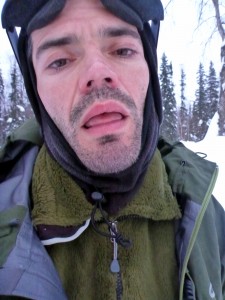 Exhausted. At least all my gear dried out, and at 3:30am I left, just a few minutes behind David Johnston and Andrea. Skwentna was just about 30 miles away, and I hoped for finally better trails. I started out without snowshoes, but after about 10 yards it was clear my hopes had been too high – on they went. Instead of better trails, I found more of the same – soft mushy stuff that took lots of energy to move on. Going was slow, and after only 15 miles I was completely exhausted again. I basically expected this to keep on going at least until Fingerlake – they had reportedly gotten almost no snow, so that was the only positive data point. I knew Shell Lake had been snowed on a lot as well. My fatigue was very disheartening. I hated my sled. I hated my snowshoes. I hated the Yentna. In addition, I had started to get some rather disconcerting gastrointestinal distress, which I attributed to a combination of the belt and the greasy food I had eaten at Luces and Yentna. I was able to compensate since my sled harness system allowed me to undo the waistbelt and only use my shoulders to pull – one of the few things that turned out very well about the sled. Mercifully about 12 miles before Skwentna a couple had made a rest stop for weary racers, and just as I pulled in, Dave and Andrea came out. They were in good spirits (Dave is always smiling) and told me to rest up and enjoy the soup and cookies! The rest was indeed heavenly, and I stayed for a good hour or more, having hearty soup, homemade cookies (with a baggie to go), coffee with chocolate and a good talk. It’s hard to be in a bad mood when met with such open hospitality, and I left the cabin in better spirits.Back on the Yentna going was still slow despite a large group of trailbreakers coming through (as I said before … you need time + cold temps to make a good trail). The weather was now very good, and after a while a plane buzzed me, and I recognized my friend Dan Bailey’s plane – with Jill in it! They flew by me multiple times yelling and waving. The remainder of the way to Swkentna was slow but uneventful, with no issues but a developing toenail blister (due to the snowshoe) and increasing fatigue, possibly also related to my stomach issues. About two miles from Skwentna I felt my fuel had run out, and I had a terribly hard time dragging myself into the checkpoint at 6:20pm – only 12 miles from my last rest. I felt I barely made it to the checkpoint. But by
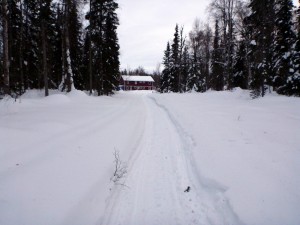 Finally arriving at Skwentna. now, I was determined to keep moving. I was still ahead of the cut-off.
At Skwentna, I got a great surprise – Jill had been there earlier with Dan and had left me a small note, telling me she was proud of me and she loved me. It almost brought tears to my eyes, and filled me with deep affection for Jill, and renewed resolve to see this through. Wary of greasy food I had a salad and some cake for dinner and slept a few hours (in my own room, very comfortably) and left with Andrea and Dave at midnight to make our way to Fingerlake, with a stop at Shell Lake. The trail leaving Skwentna led us across the airstrip, a beautifully hard-packed and prepared surface which had allowed Dan to land his wheeled airplane earlier. It was beautiful and cruel at the same time – a quarter mile of pure bliss, efficiency of movement which I would not feel again until the last 12 miles of the race. A cyclist, Dario, overtook me on this stretch, something that I was quite excited about, ironically (as it turns out the cyclists were equally excited in the opposite direction – aka demoralized – by our overtaking). Good for bikes, right now, meant good for us. Sadly, I overtook him back only 20 minutes later. Reality had come back. Soon enough I emerged on the endless seven mile long swamp crossing that led to the shell hills. I was glad it was dark because this stretch goes on endlessly, and the trail was in no better shape than before, as most open areas were prone to be windblown.
The hills before shell lake after the swamp turned out to feel about twice as long and high than when I did this with Jill just a few weeks back – I actually struggled surprisingly (well may not) much with the climbing, which shocked me since I had looked forward to a change in terrain. Moreover a moose had decided this was its trail, and had walked all the way up the hills and halfways back down, leaving the trail in a messy state which can occasionally be challenging even with snowshoes – those animals make huge holes! I never saw the moose, but it must have been close since Dave and Andrea did not see any mooseprints in on the trail …
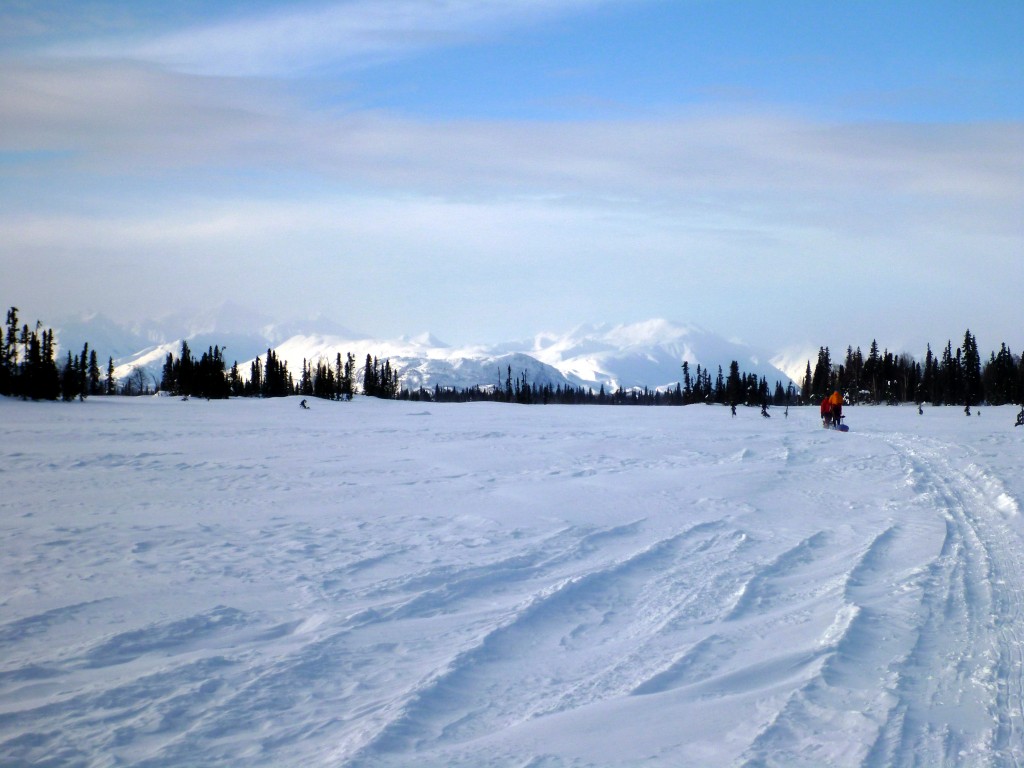 On the way to Fingerlake ... Andrea and Dave into the windy desert ... I got to the shell lake lodge late in the night, probably at 4 or 5am. A short nap and a big pancake breakfast later, Andrea, Dave and I were on our way to Winterlake. I had long been excited about to reach this stage of the race, though I envisioned getting here a lot less fatigued and a lot sooner. I now entered unknown terrain – and we got closer to the mountains, breathtaking views and the “real adventure”. Fingerlake was around 20-25 miles away, which didn’t seem so bad. As it turns out, those miles would be amongst the toughest miles for me in the race. It was a beautiful but incredibly windy and quite cold day. The wind really was a pain, you have to be careful with your clothing, and getting food or water was an ordeal. But worse, it meant that the trail was mostly completely blown in with snow. I could see sled tracks on the original trail disappear under the blown in snow, then reappear later in a wind-shaded section, taunting me. The uneven rapid change between deep soft snow and semi-hard trail made it near impossible to find any rhythm. When I fell just 5 minutes behind Andrea and Dave their tracks were already almost gone. It was slow, and very tough going. Every once in a while the views of the Alaska range and even Denali lightened my mood and made me take pictures, momentarily lost in the pristine and immense beauty of our surroundings. But mostly all I wanted was to get to Fingerlake. And the more you want something, the longer it seems to take. In addition, a new problem had arisen – some small muscle in my back started hurting from pulling my sled. It was an infuriating pain ranging from a tickle to strong enough that I could barely breathe. It was somehow between my ribs in a place where I just couldn’t seem to reach it, and I could not figure out how to stretch it out. It just kept hurting and driving me crazy … I even took off my harness and pulled my sled with my hands. This made time go by even more slowly …
 Pristine windblown snowscape. 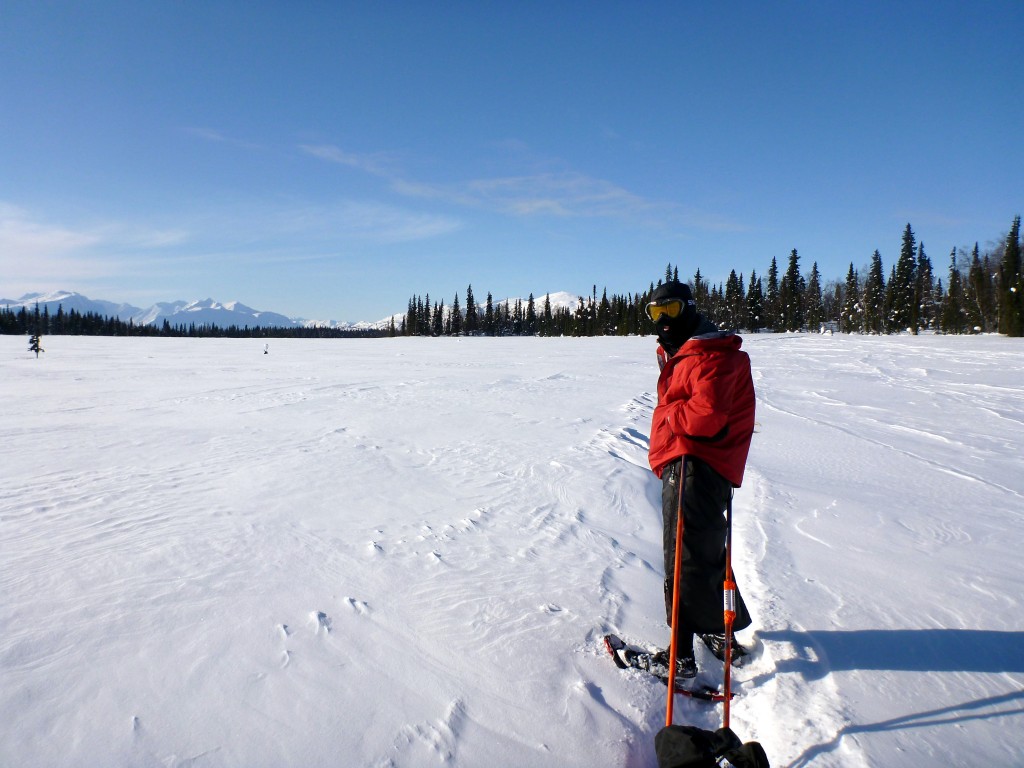 There goes the trail ... 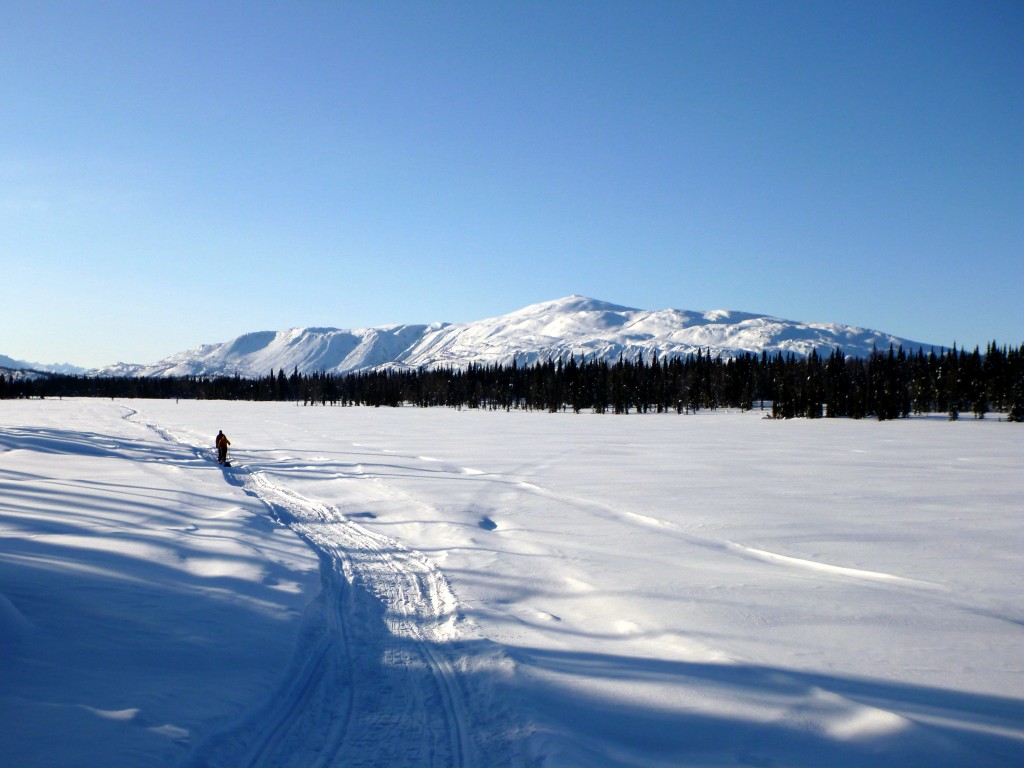 Breathtaking views provide moments of pure bliss Finally, a few miles before Fingerlake, the trail crossed one lake after the other, and for each one I thought “that might be it”, but my GPS showed the truth … yet it was unbelievable how long we took for those last few miles to the extent of my questioning the GPS. It was one of the few sections of the course where I really lost my cool and started to get angry and irritated at just how slow this was, I think I even cursed a couple of times when small things bothered me. We reached Fingerlake at 7:15pm, 19 hours after leaving Skwentna, for an average speed of 2:08 miles per hour. We were about 130 miles into the race, I was completely shattered, and we were just a little more than a third of the way. I was excited to embark on the real journey, but at the same time while I wanted to continue, I was more unsure than ever if I could actually finish this thing. The trail was supposed to get better, though “5 feet snowdrifts” had been reported on the way to the next checkpoint … and it was also supposed to become much more challenging, at least in “normal” years.
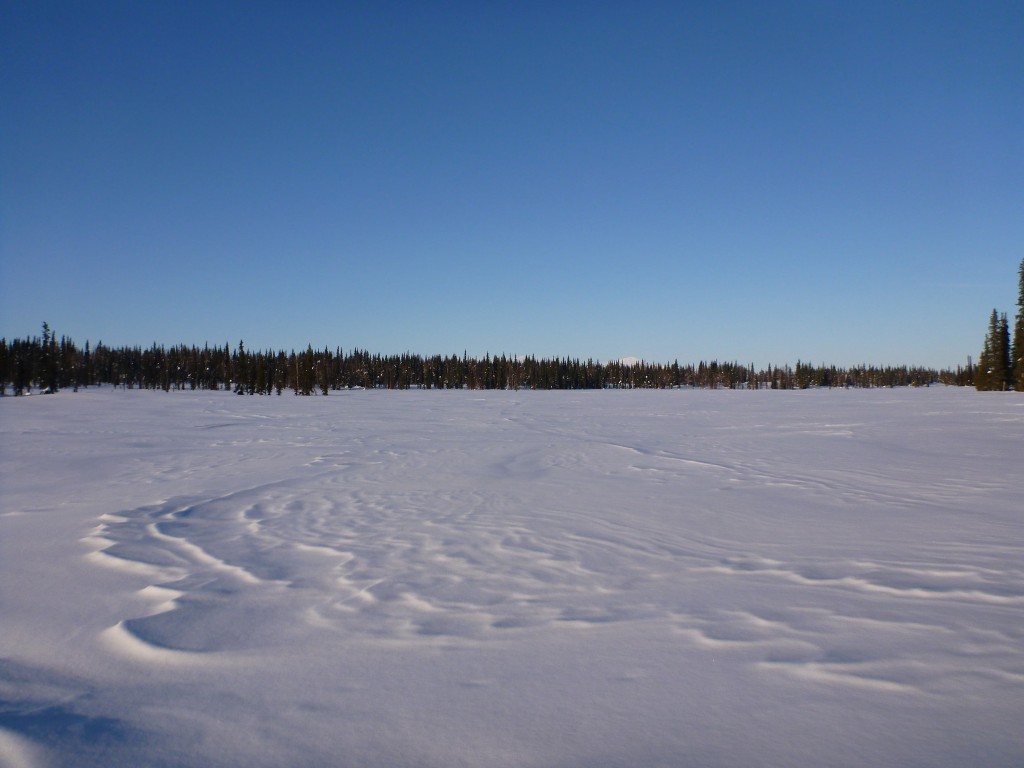 Eerie windblown landscape nearing Fingerlake Stay tuned for part 2 … with new challenges, more mountains, longer miles, lower temperatures and even more whining!
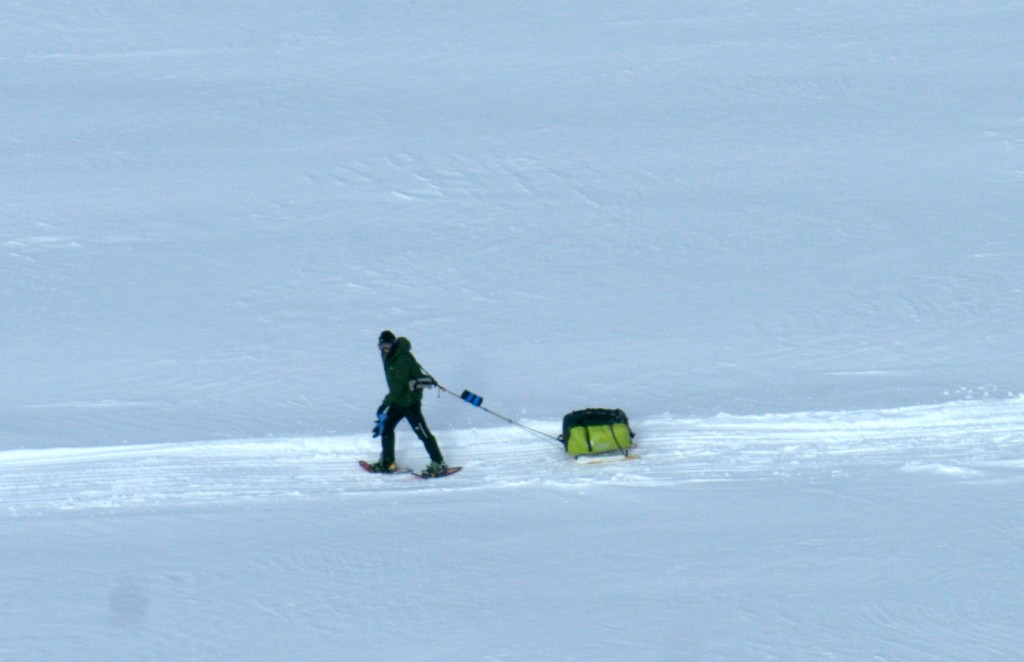
My friend Dan Bailey and I were able to fly over the Yentna River this afternoon, and we spotted Beat about 6 miles south of Skwentna at 3 p.m. He was moving well and waved at us when we flew past. I haven’t heard from him since last night but progress is going well relative to the difficult trail conditions. I will try to post more later tonight.
|
|